The Ground Day Breaks
A solo exhibition curated by Nat Muller
ATHR Gallery, Riyadh, 2024
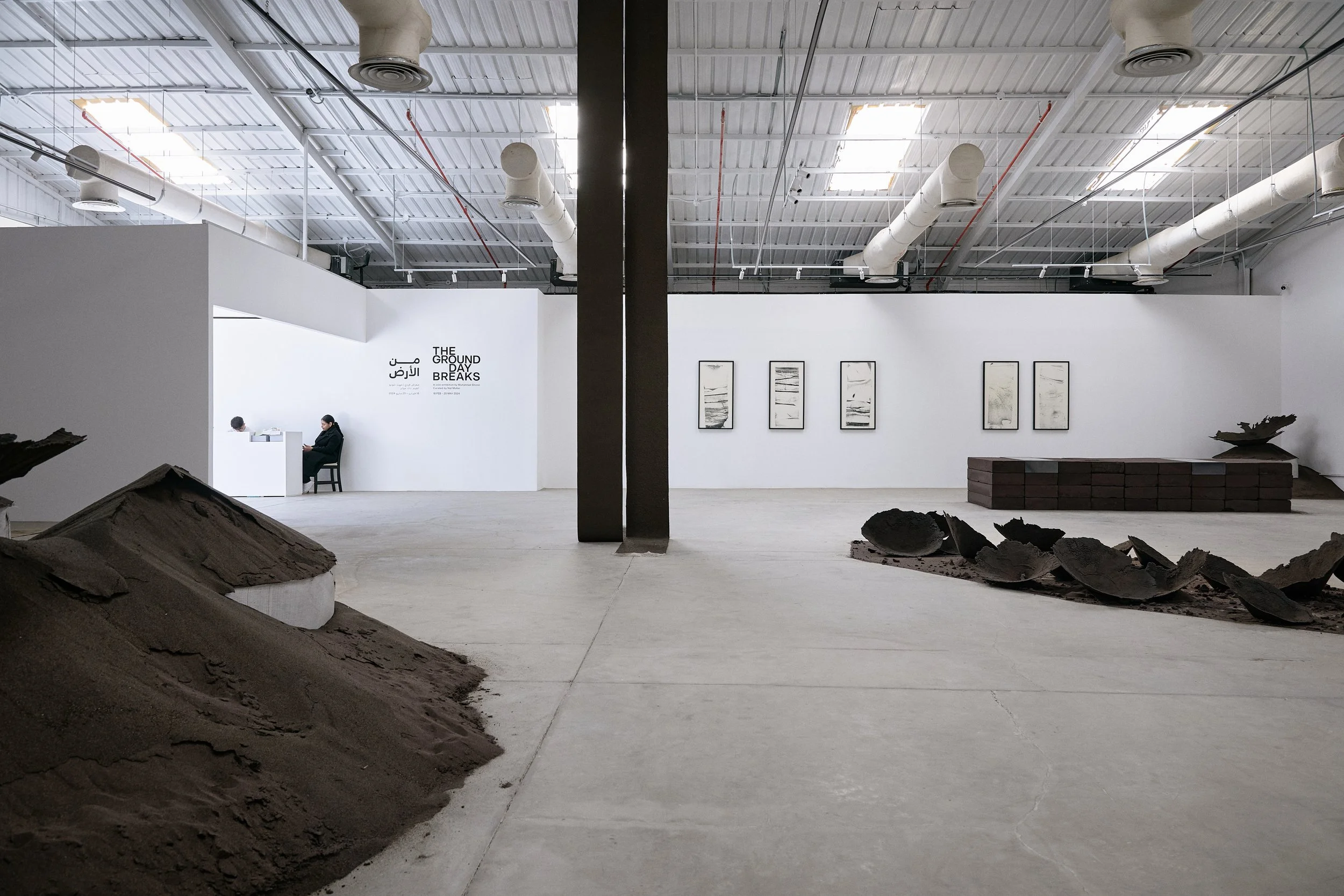
Architecture fixes narratives, forcing belief, ritual, and story into rigid, immutable form — impossible to negotiate with. When the earth is compressed into certainty and function, meaning hardens into dogma; a structure that demands stability cannot be reinterpreted. Only when it breaks, when the stubborn earth collapses into rubble, does imagination unfurl. Rubble is architecture becoming human: fallible, open, unfinished. When architectural volume sheds its function, it yields to pure possibility.
Desert sand resists this rigidity. It cannot anchor itself in concrete; it repudiates the monolith, the icon, the monument designed to enforce a singular, lasting narrative. Architecture as fixed text fragments here, its authority undone by the refusal of its own grain.
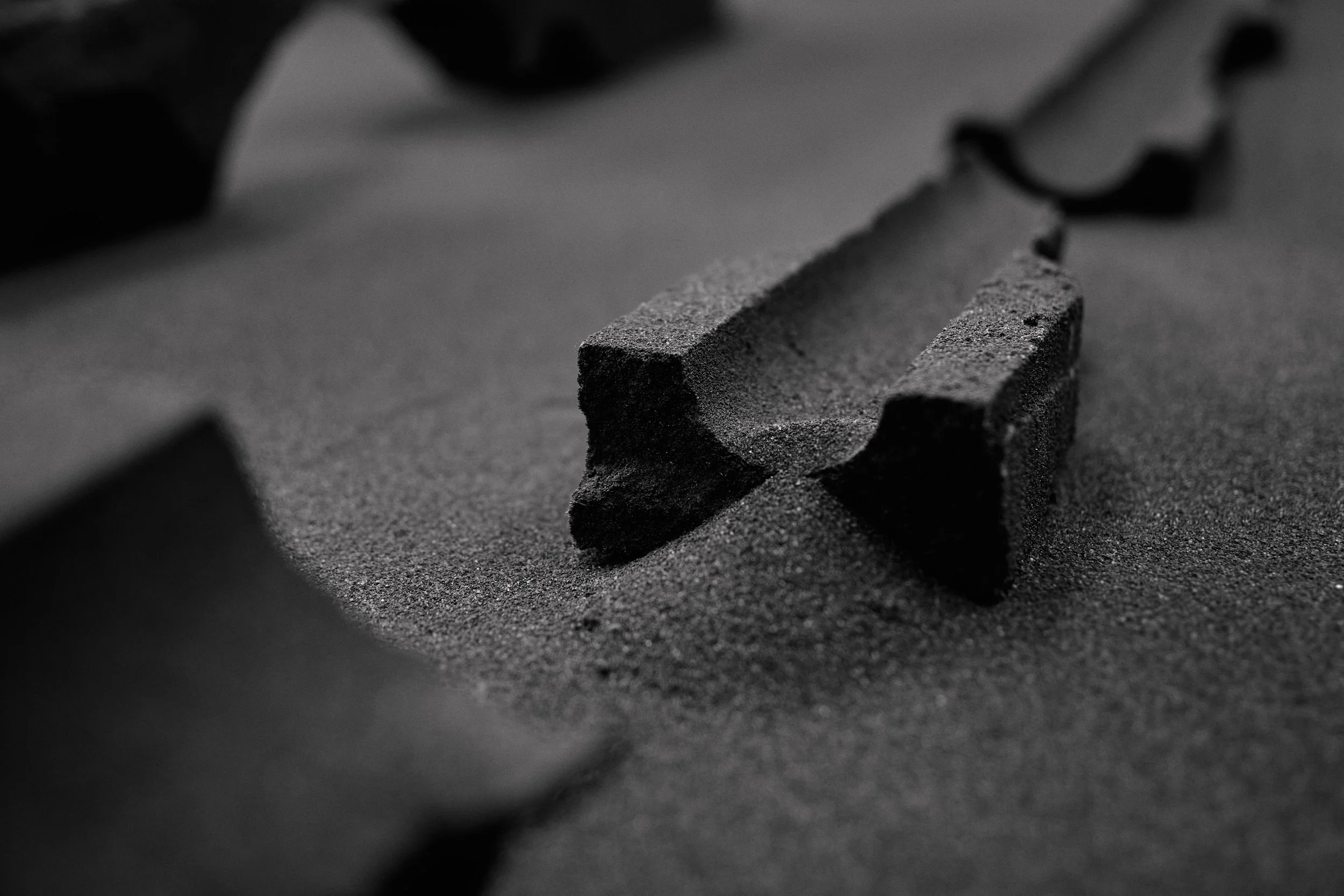
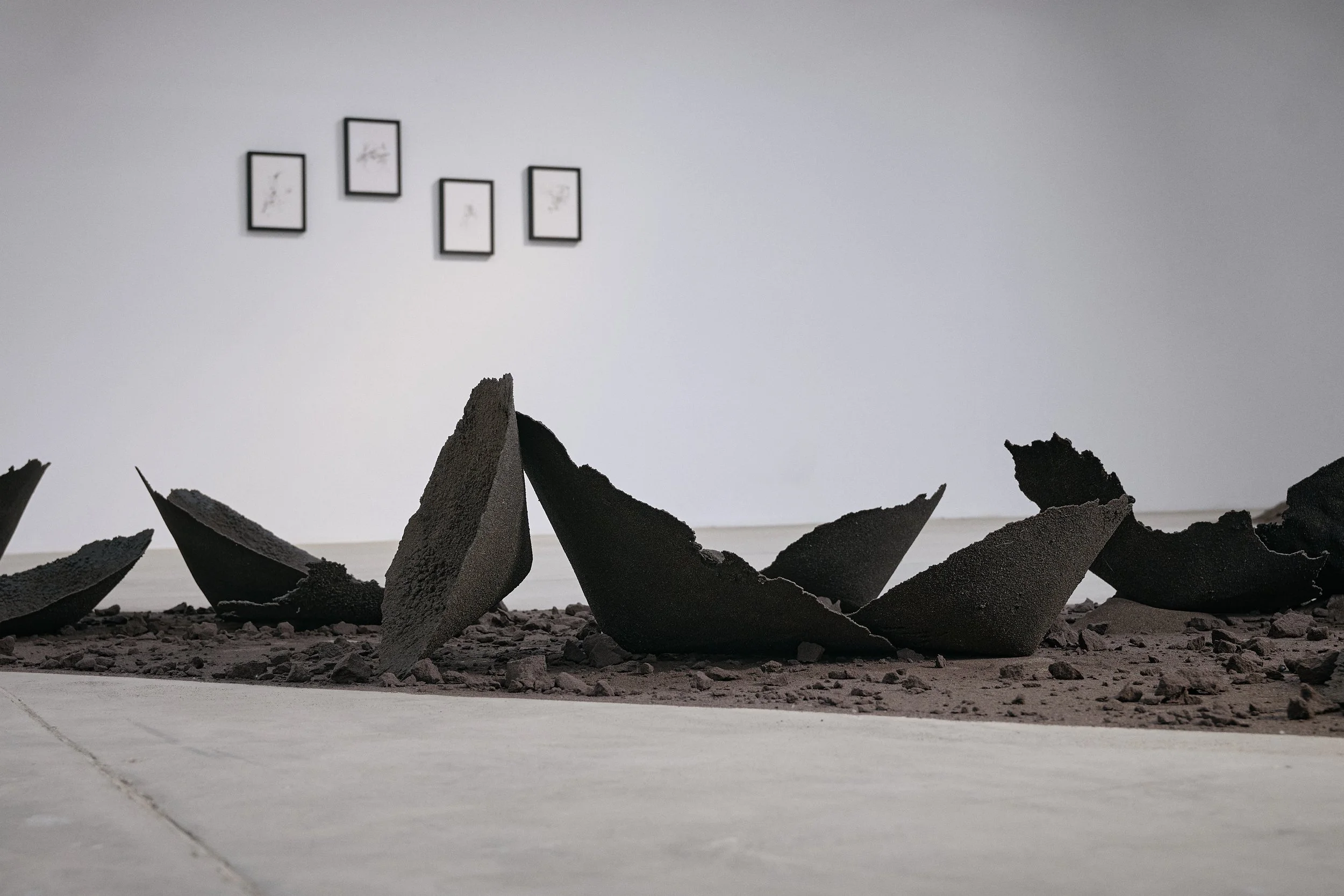
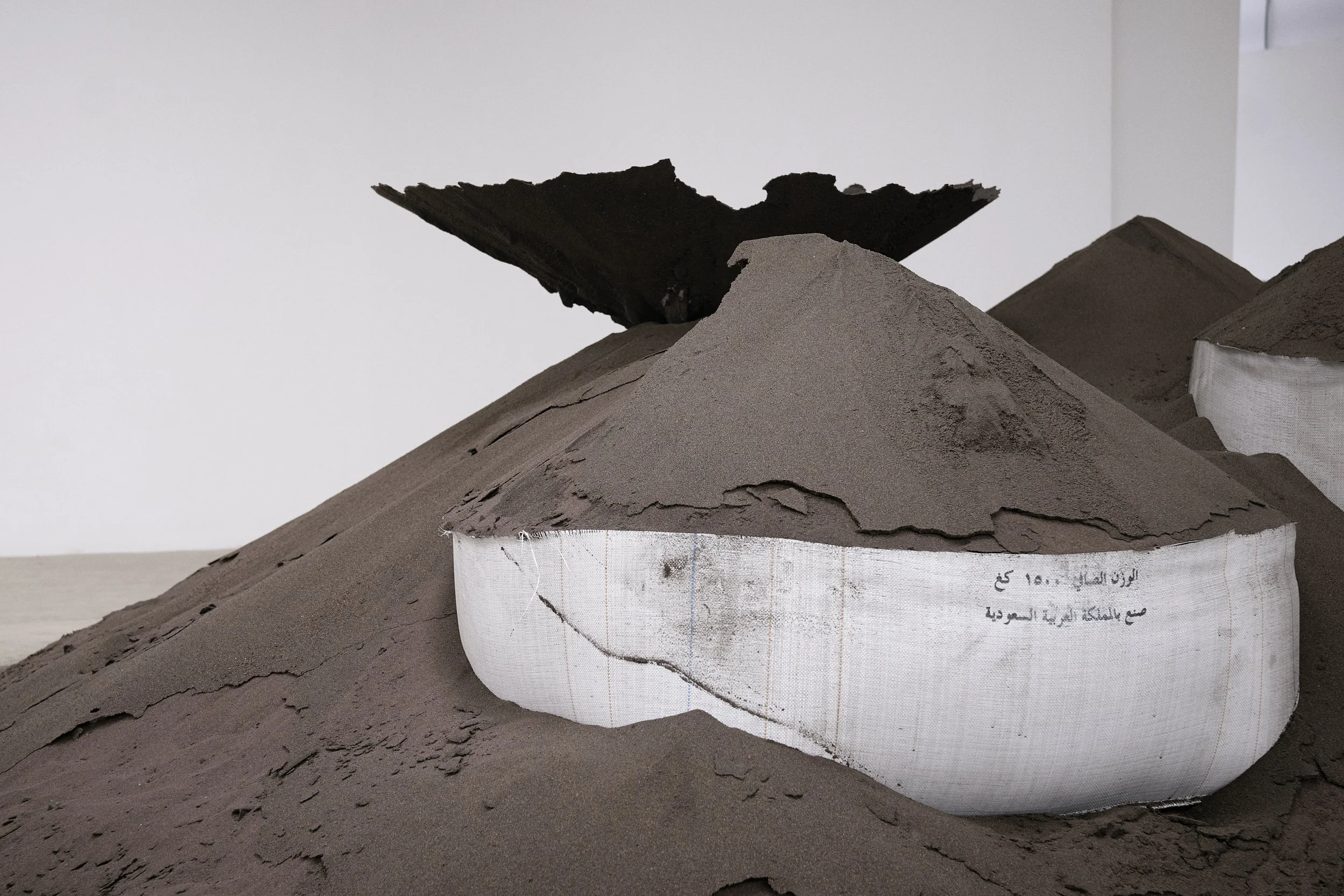
This carbon-fired sand, once compressed into industrial moulds for foundries, was dismissed as spent and useless for construction. Shono retrieves the rejected earth and performs the counter-ritual: the mould is shattered. The mono-form breaks apart, and the material, released from purpose, surges into restless potential.
A single imposed narrative fragments into a field of infinite readings. Grains scatter, cluster, and shift, refusing final geometry or singular meaning. The breaking of the block opens interstitial space: a fertile void between particles where new meaning resides. Rubble is not ruin but a new form of authorship — the earth writing again through dispersion, impact, and the movement of matter.
Material research becomes an urgent act of world-unmaking and world-making. What once held a fixed story is now an unfolding text shaped by erosion, line, and entropy. Every attempt to fix or finalise must surrender to this truth: the ground does not hold; the ground breaks — and with it the imagination once sealed inside the block.
Exhibition

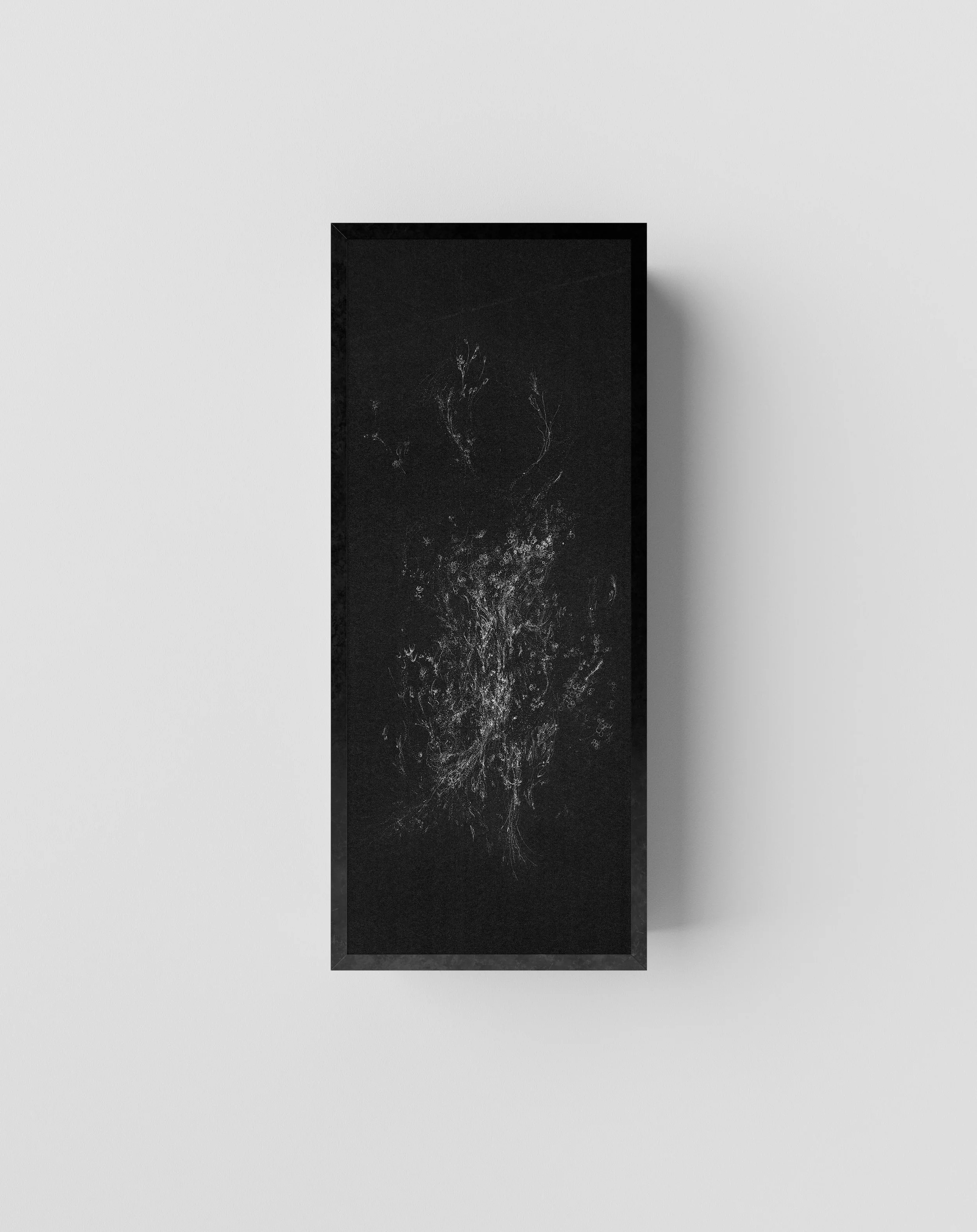
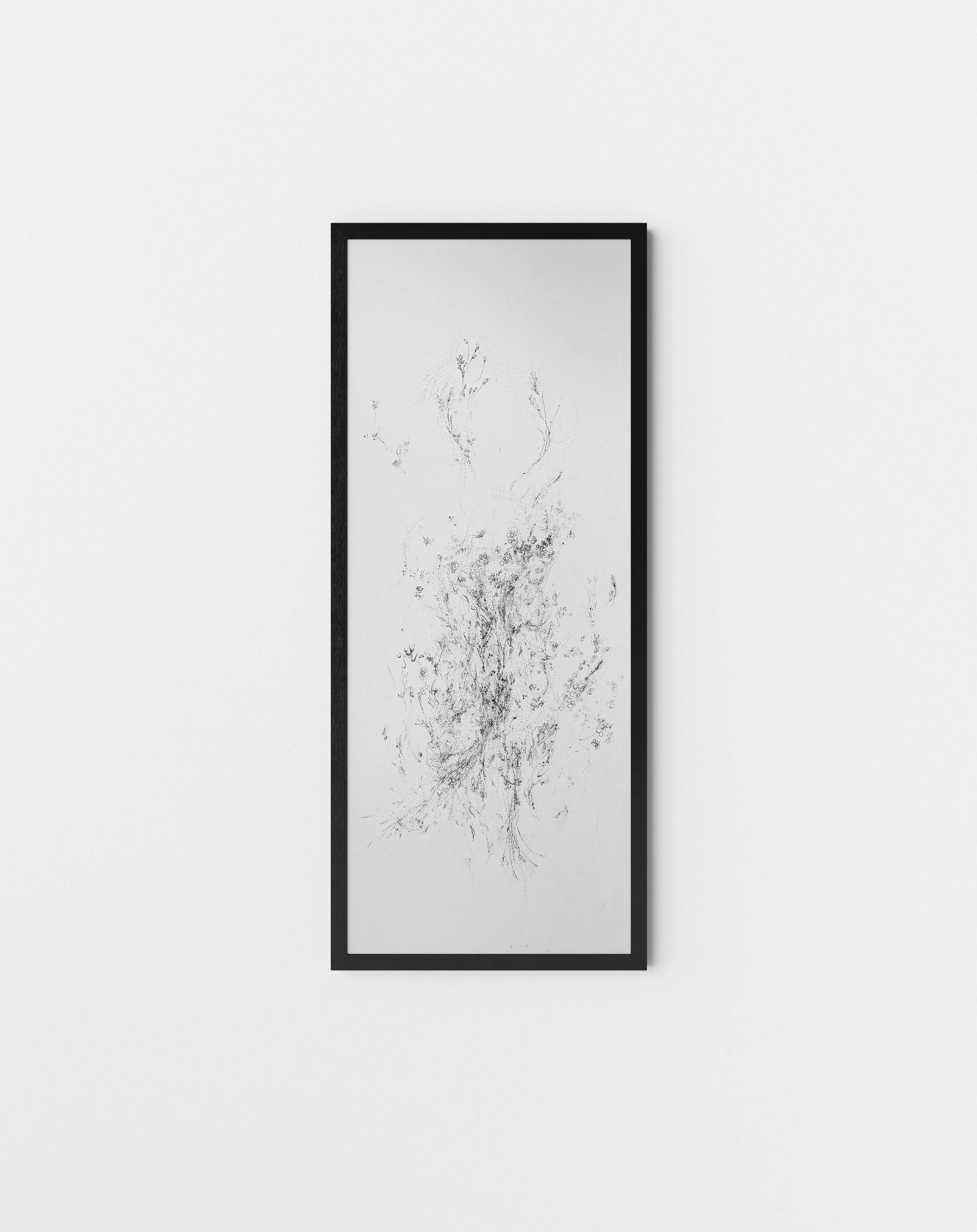
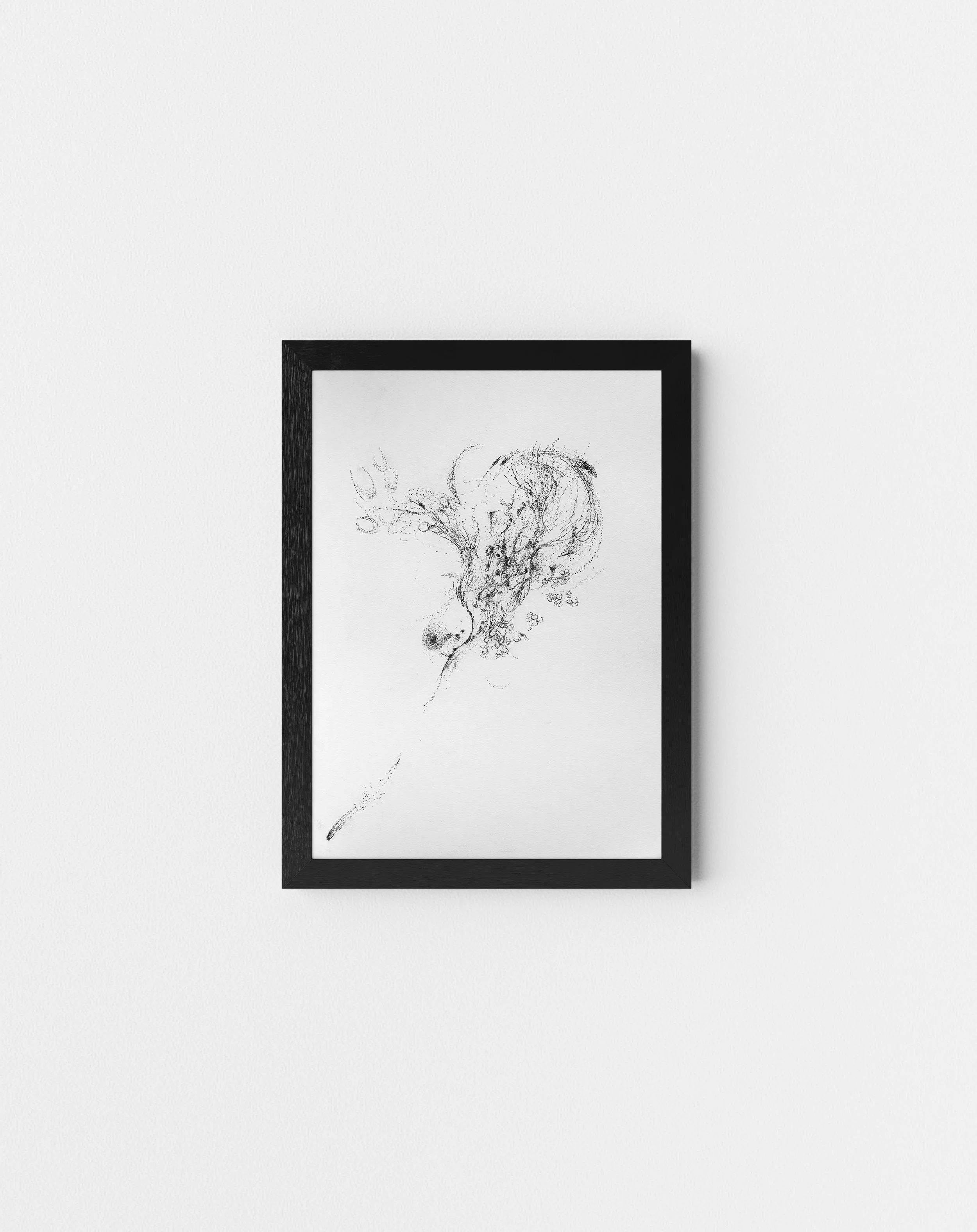
Seedlings & Night Dew
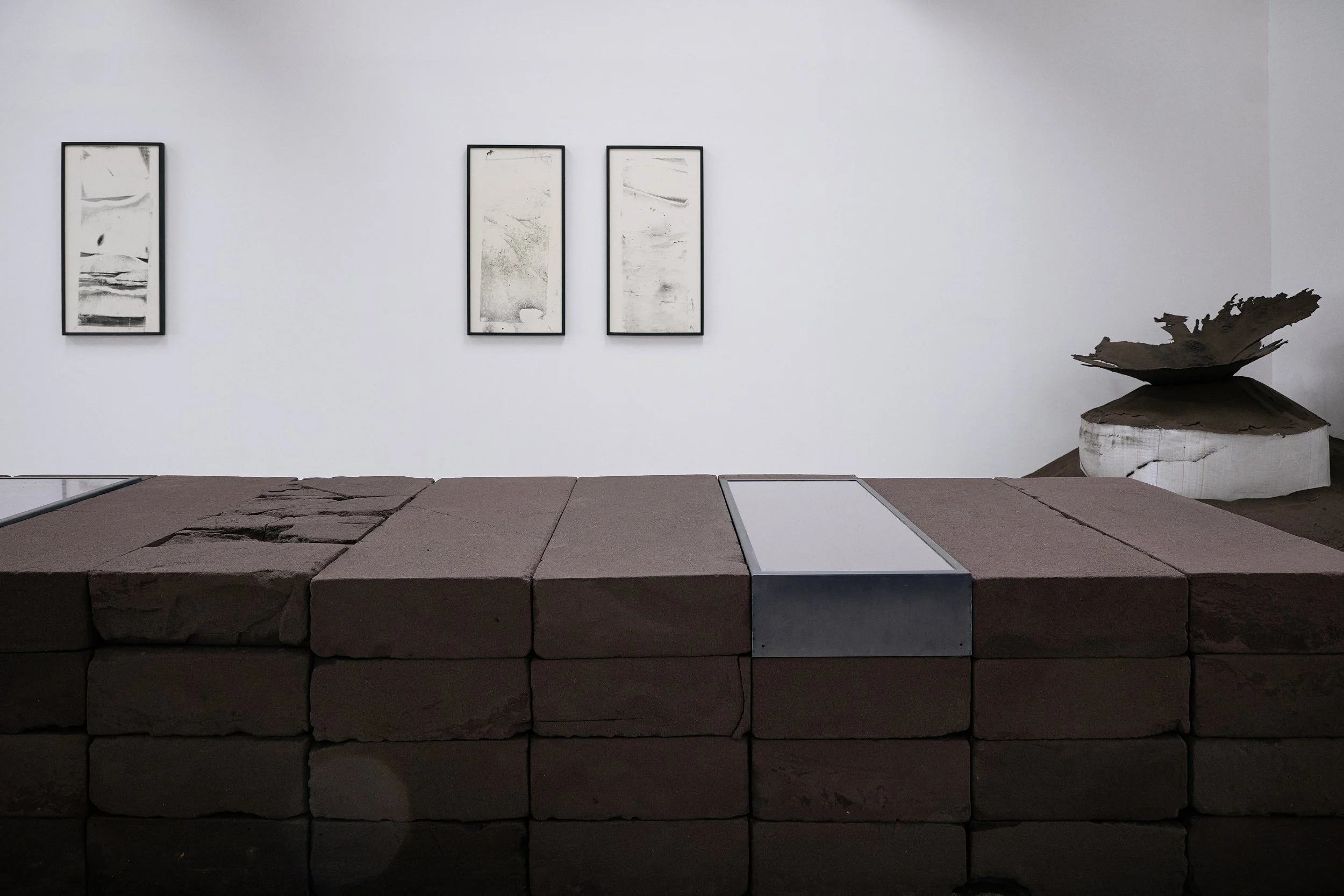
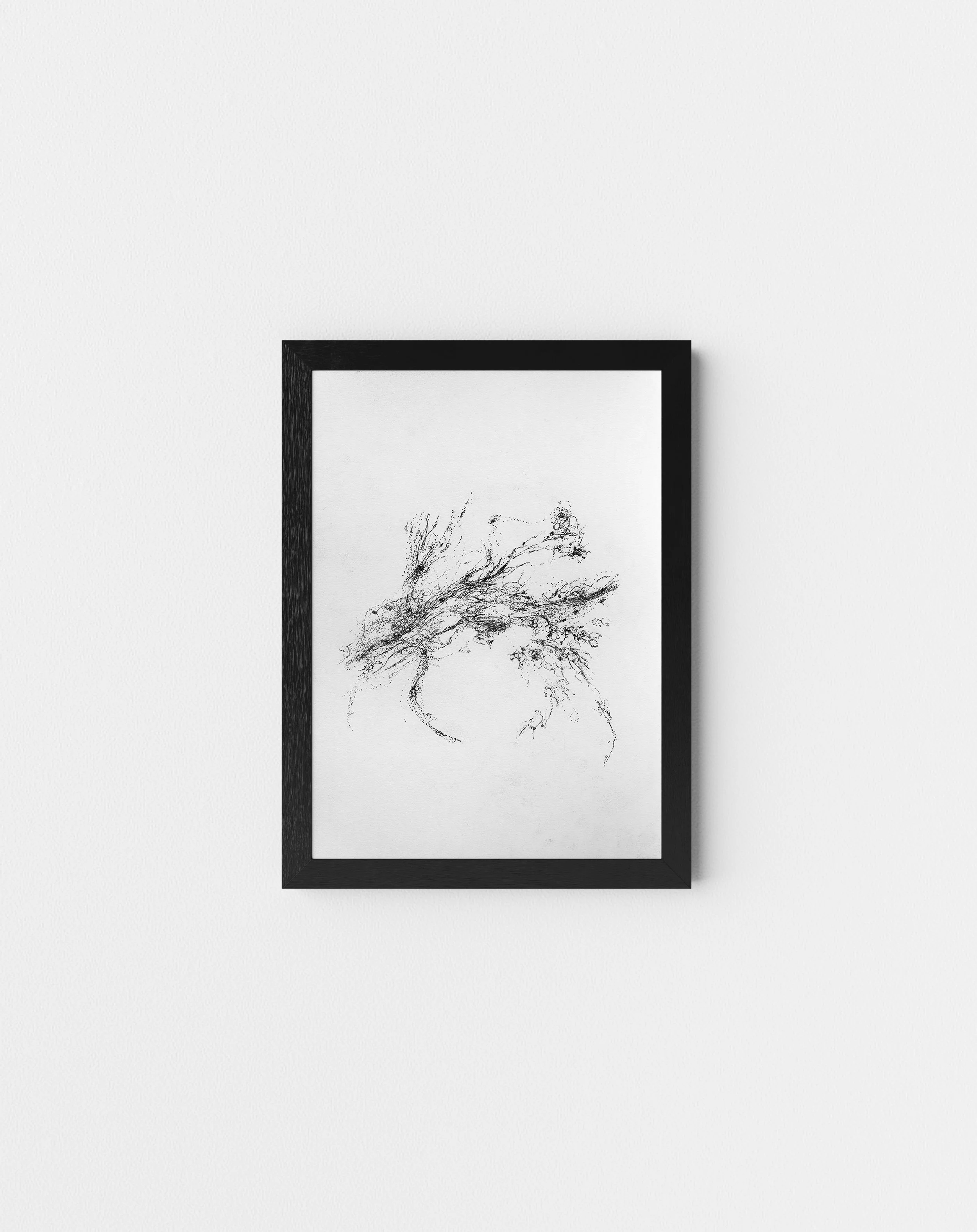
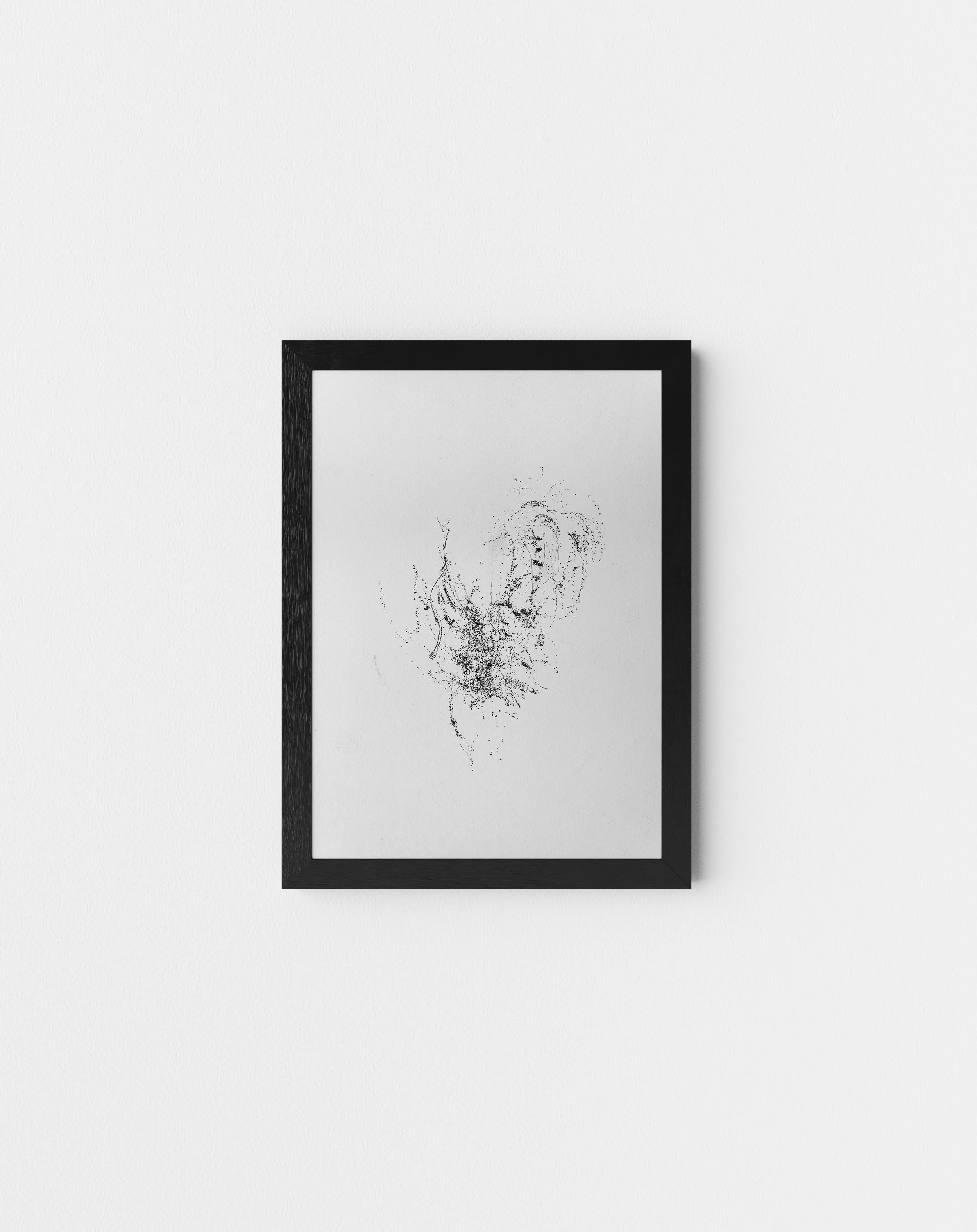
In Seedlings, a carbon transfer on paper, the grain blooms feverishly, outgrowing the frame as it seeds into spore-like forms that recall sand's role in cultivation. Its twin, Night Dew — a series of carbon-paper lightboxes worked in stipple from memory — renders the grain as ghostly trails, fragile luminous traces suspended between encroaching darkness and tomorrow's light, like dormant seeds awaiting germination. Together they shift from determined energy to latent possibility: each grain, each dot, distinct up close yet merging into new patterns from afar.

-
![]()
Night Dew
Metal lightboxes and carbon paper. 40 x 100 x 15 cm
-
![]()
Seedlings
Carbon transfers on paper. 40 x 100 cm
-
![]()
Seedlings
Carbon transfers on paper. 23 x 15.5 cm
-
![]()
Seedlings
Carbon transfers on paper. 35.5 x 25.5 cm
-
![]()
Seedlings
Carbon transfers on paper. 35.5 x 25.5 cm
A Promise of Breaking
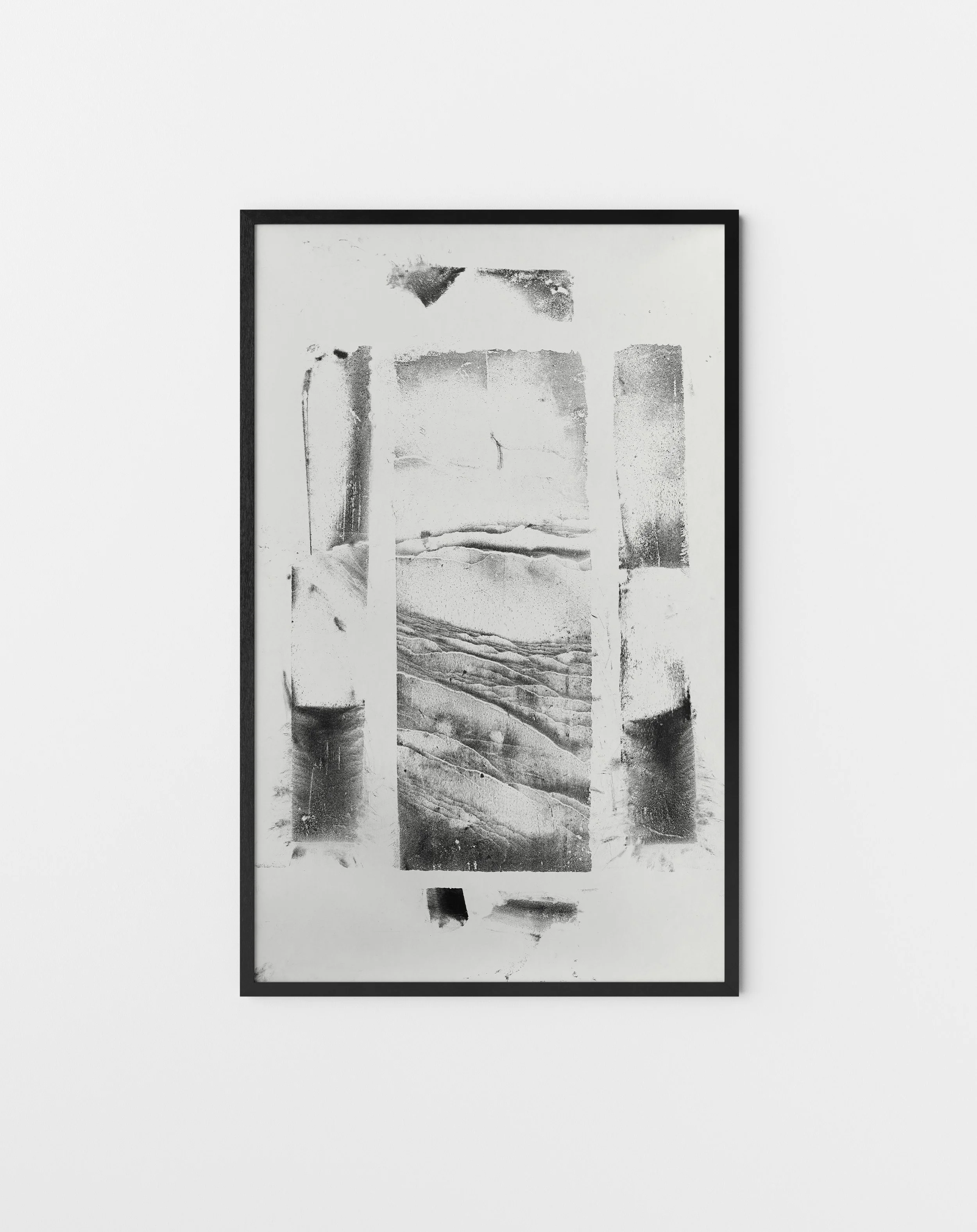
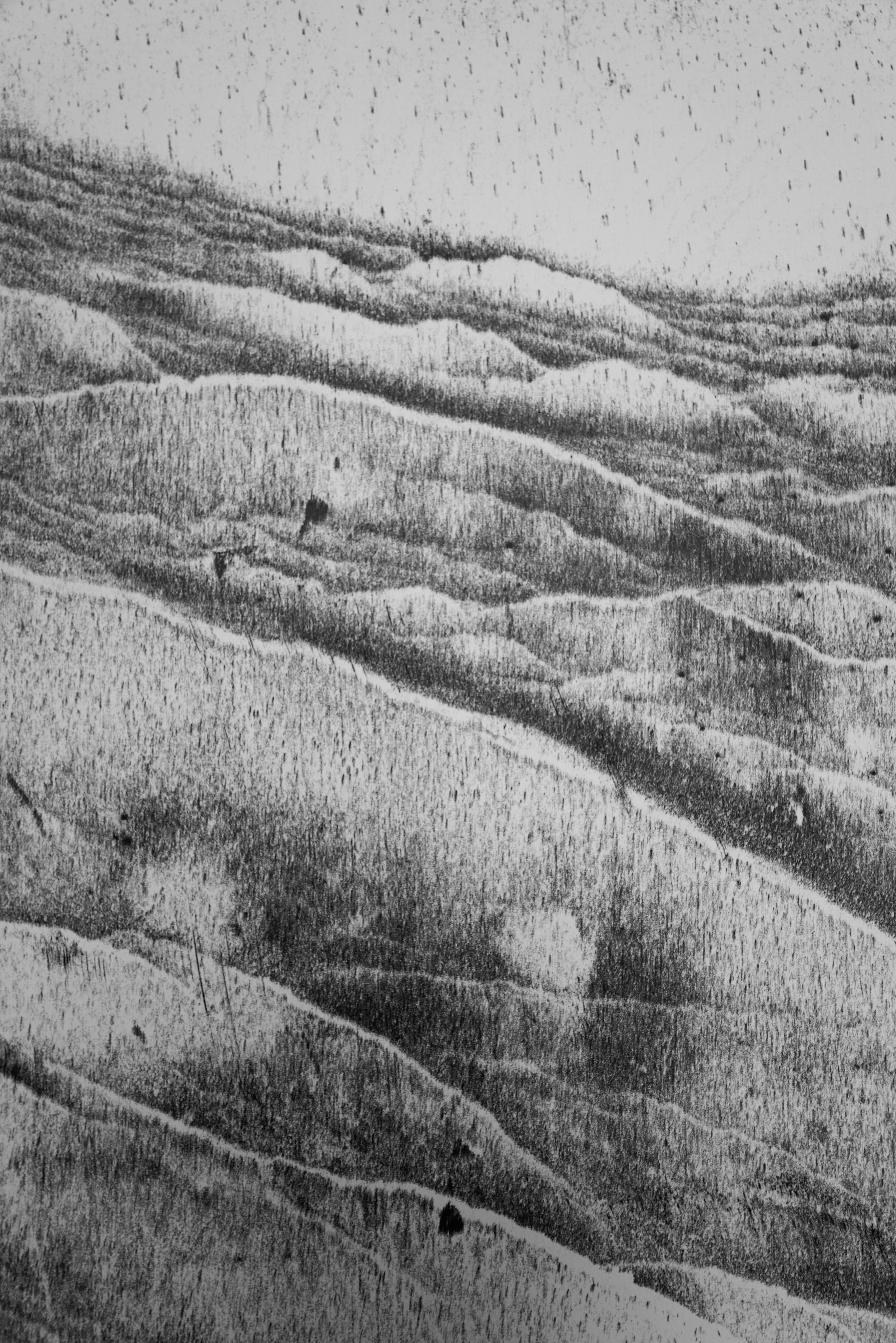
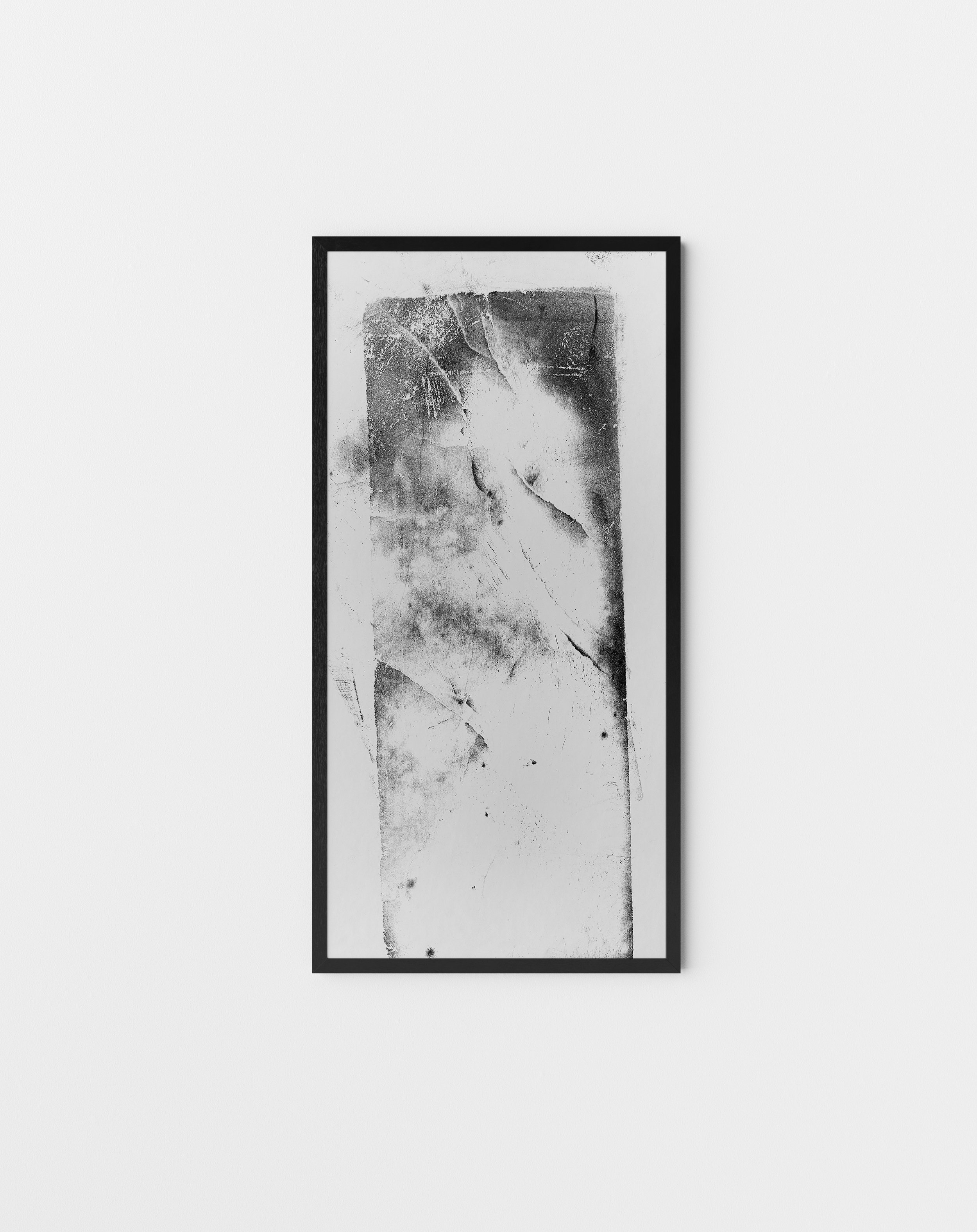
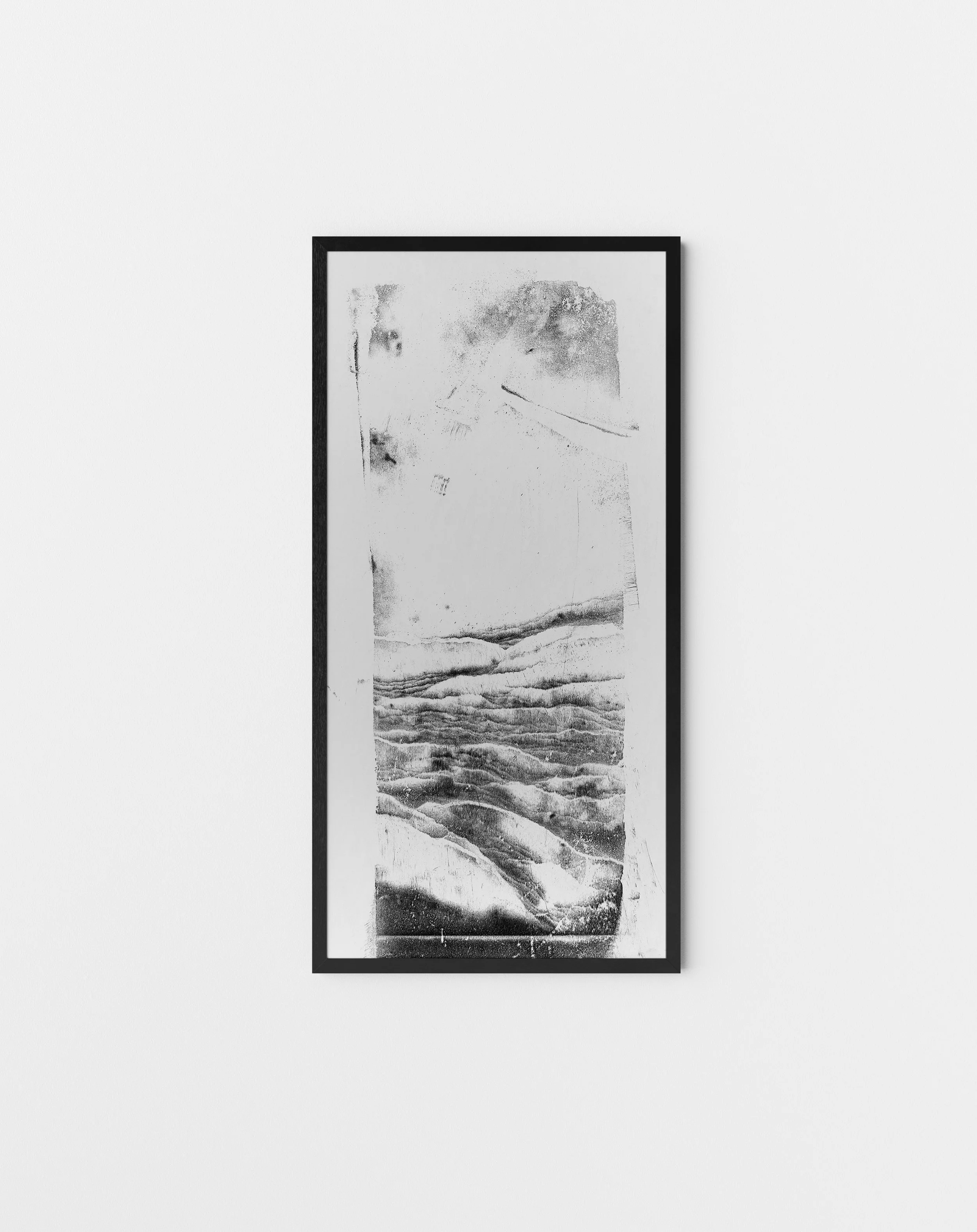
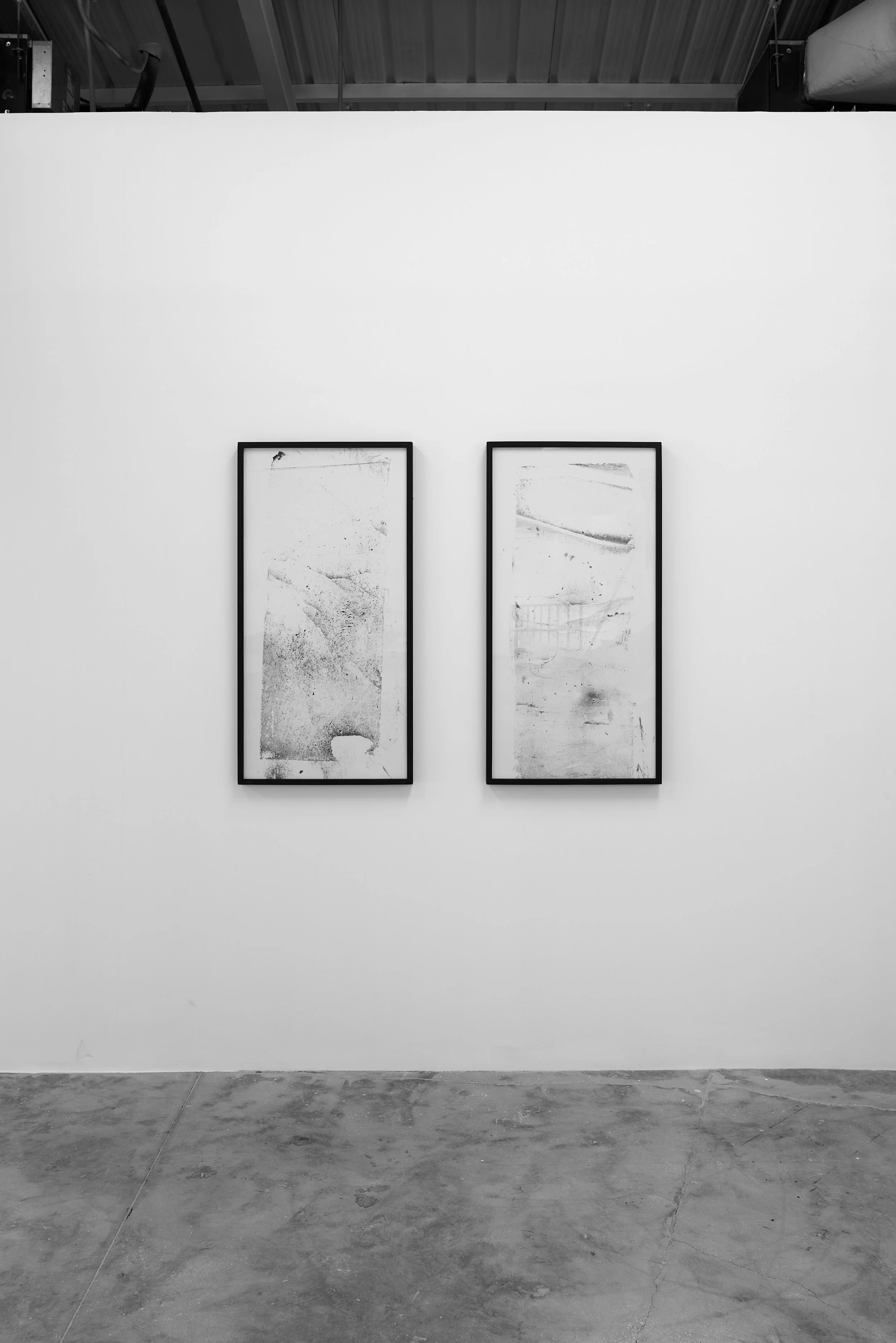
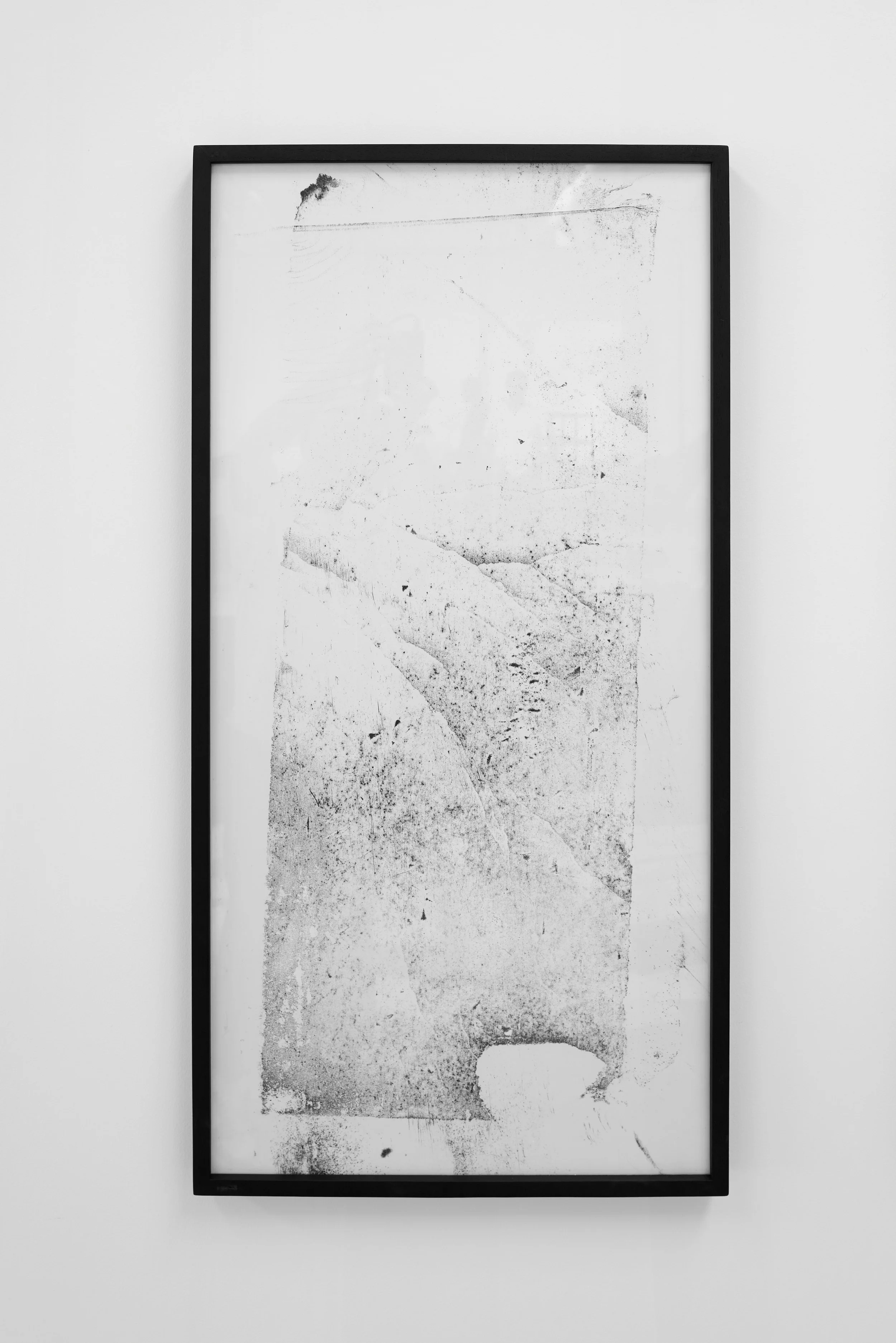
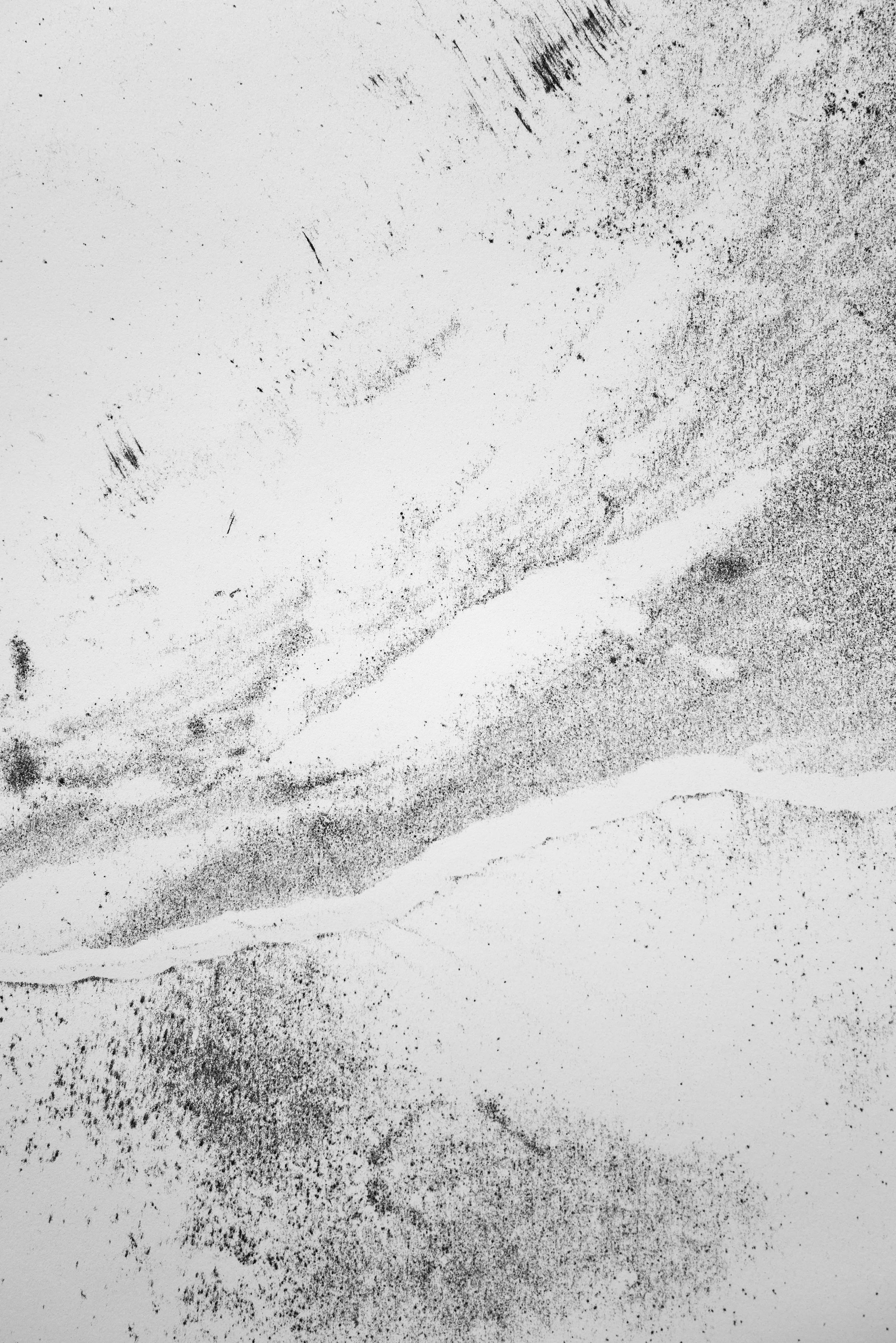
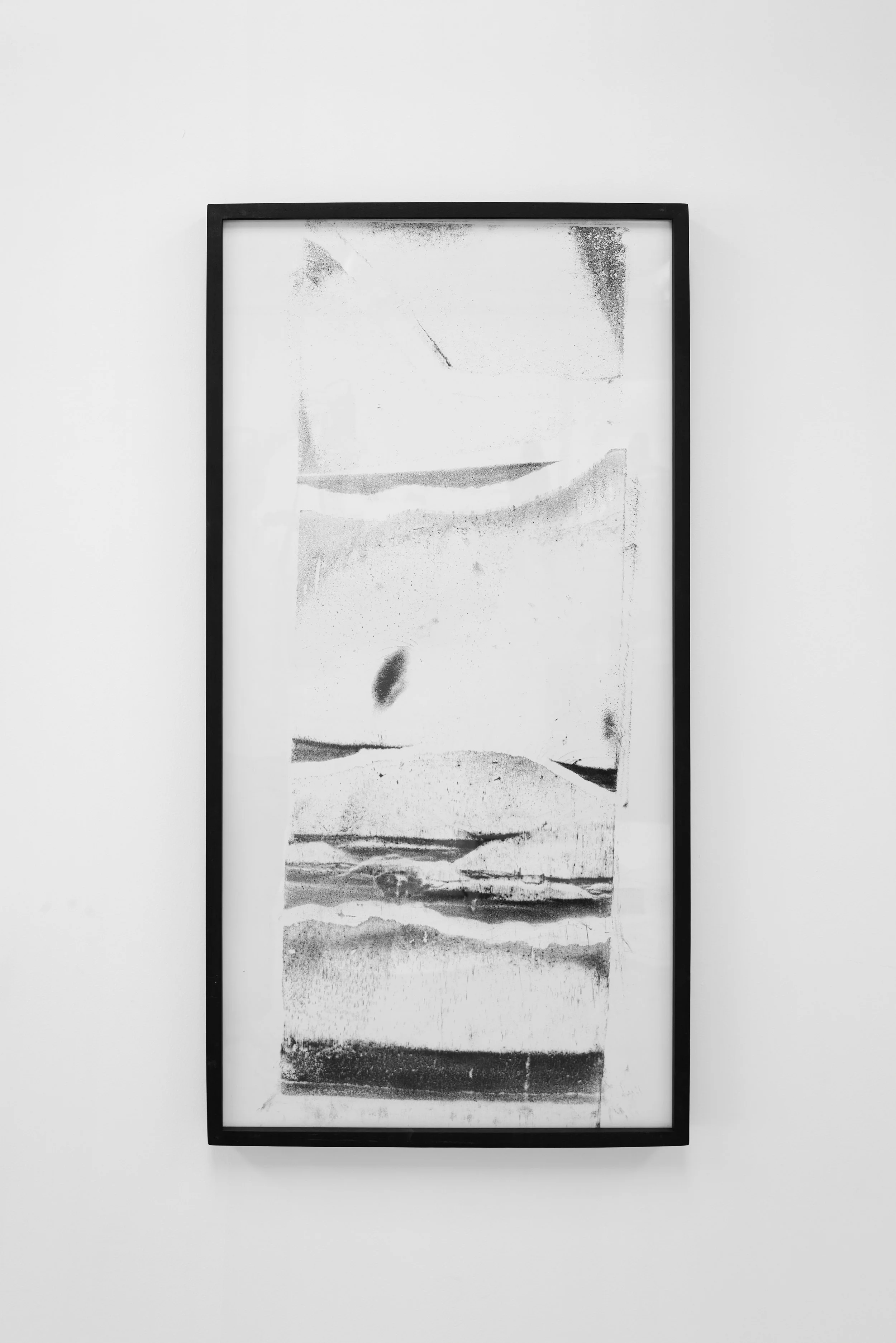
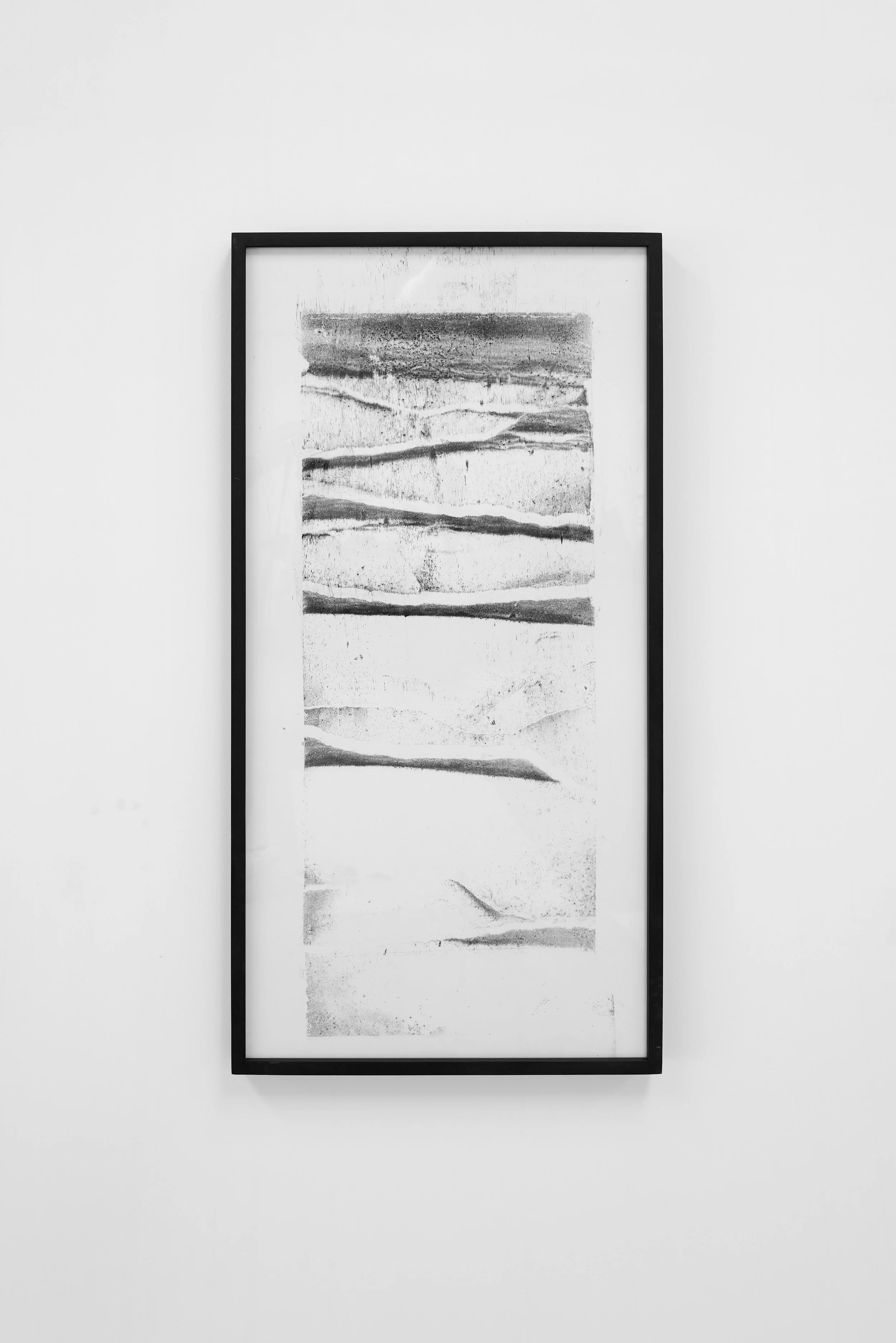
A Promise of Breaking captures the carbon transfer of the block's violent impact. Each print registers the moment a fixed body fractures, releasing the story sealed within it. The break becomes a point of departure, shattering the monolithic narrative into dispersal, movement, and raw possibility.
The monolith fragments into an infinite landscape of reading — an imprint and an open narrative space between the pieces. The result is an architectural blueprint of interstitial action, a landscape built of infinite grains of matter and meaning. The gap becomes a threshold, the mark an opening, the pigment pure potential. The earth — the block's original material — reasserts its agency in the moment of release.
The series holds a haunting sensibility, lingering in the void where form unfixes and meaning slips, where solidity explodes into potential. Nothing is static: the material, even its shadow, is mobile, fluid, transformative.
-
![]()
A Promise of Breaking
Series of unique impact prints.
Carbon transfers on paper.100 x 160 cm
-
![]()
Detail (100 x 160 cm)
Carbon transfers on paper.
-
![]()
A Promise of Breaking
Series of unique impact prints.
Carbon transfers on paper.56 x 112 cm
-
![]()
A Promise of Breaking
Series of unique impact prints.
Carbon transfers on paper.56 x 112 cm
-
![]()
-
![]()
A Promise of Breaking
Series of unique impact prints.
Carbon transfers on paper.56 x 112 cm.
-
![]()
Detail (56 x 112 cm)
-
![]()
A Promise of Breaking
Series of unique impact prints.
Carbon transfers on paper.56 x 112 cm.
-
![]()
A Promise of Breaking
Series of unique impact prints.
Carbon transfers on paper.56 x 112 cm.
From the Land
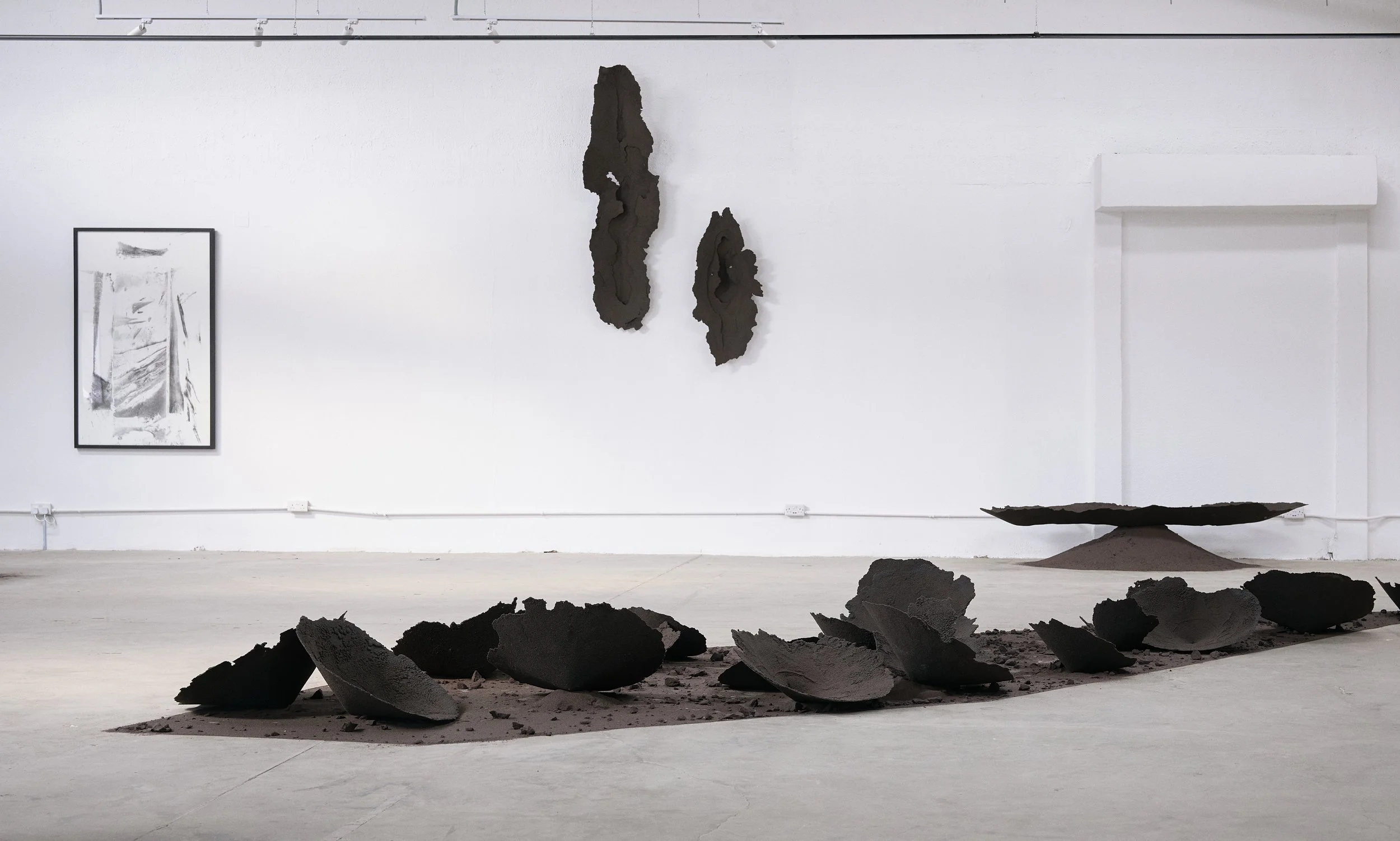
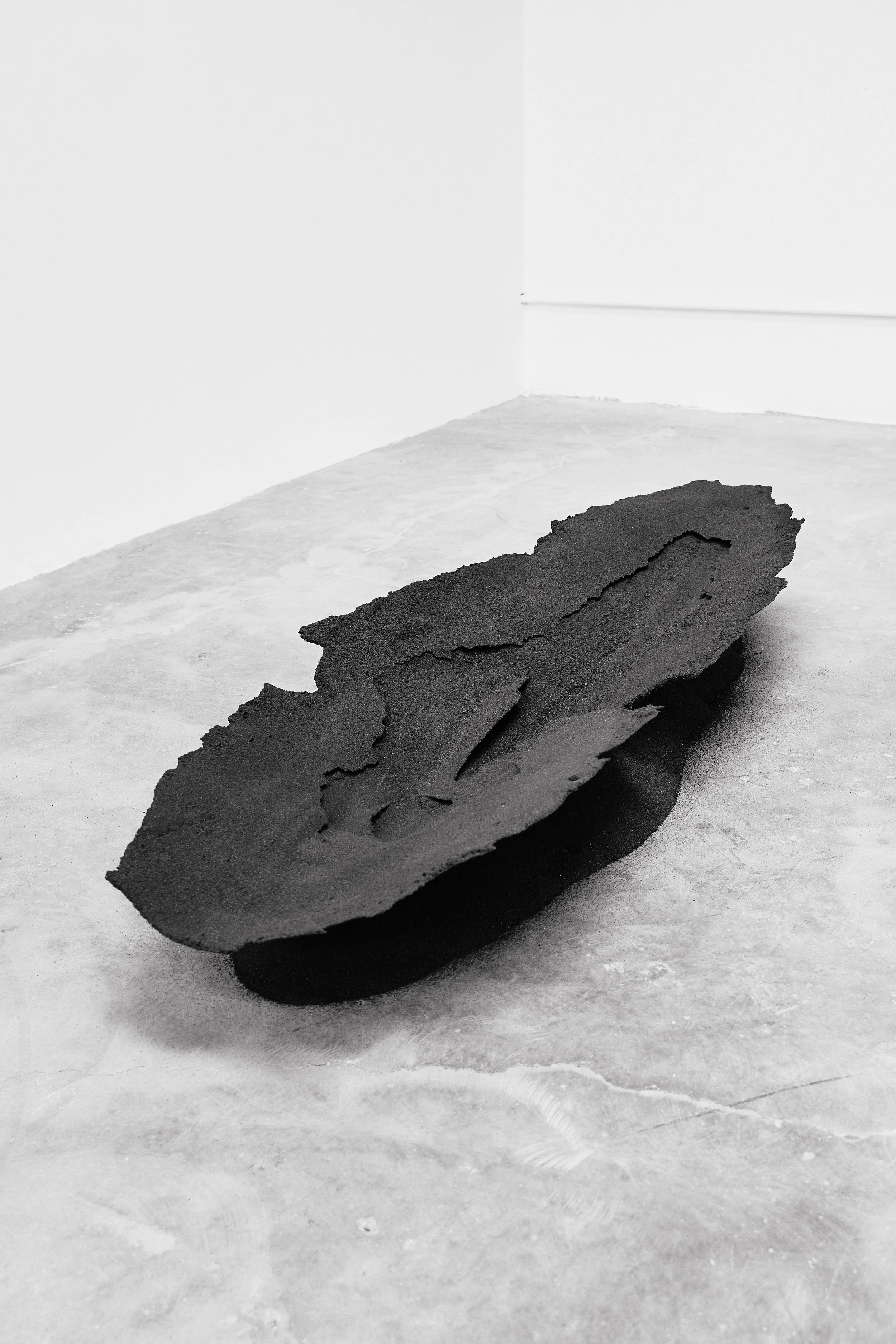
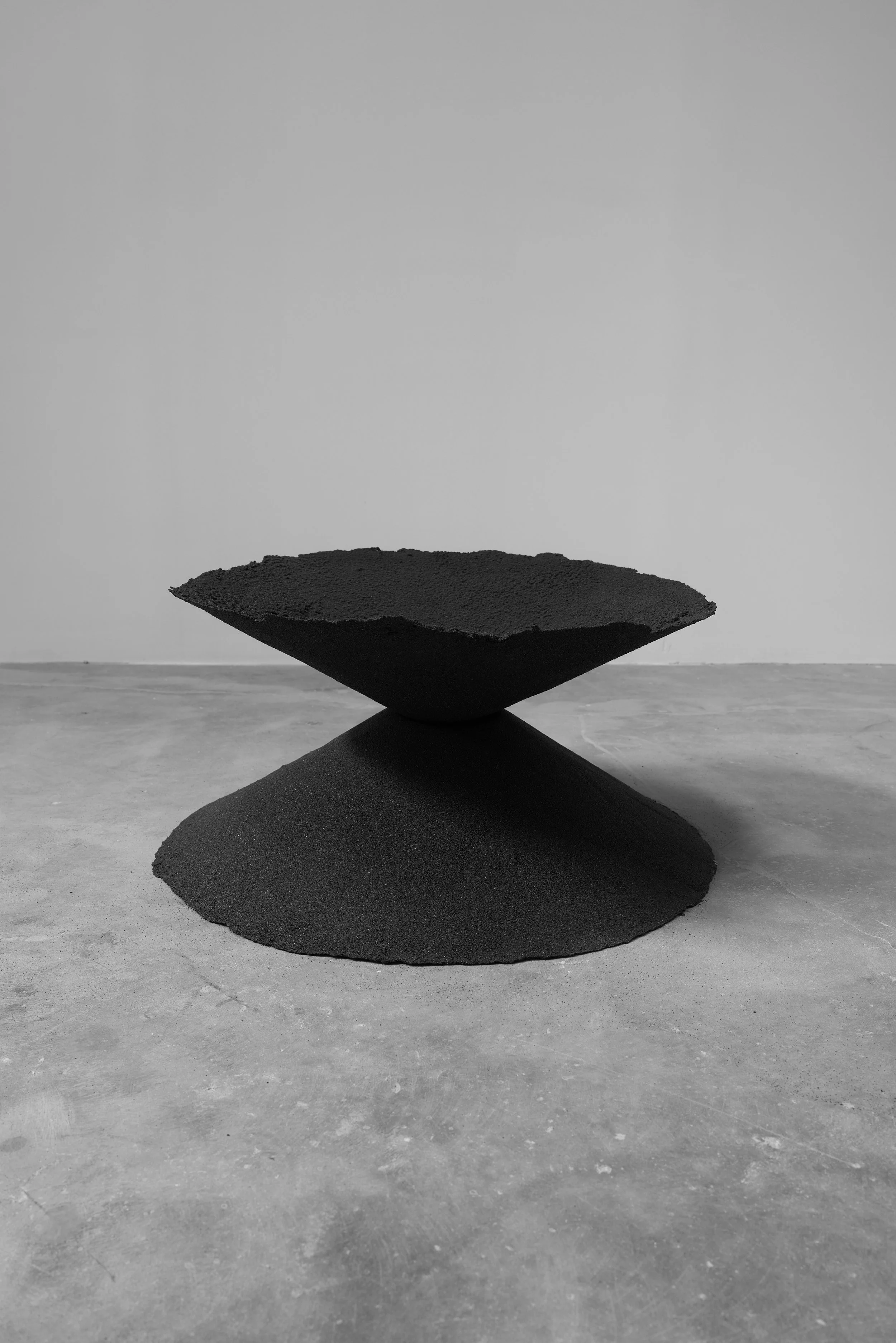
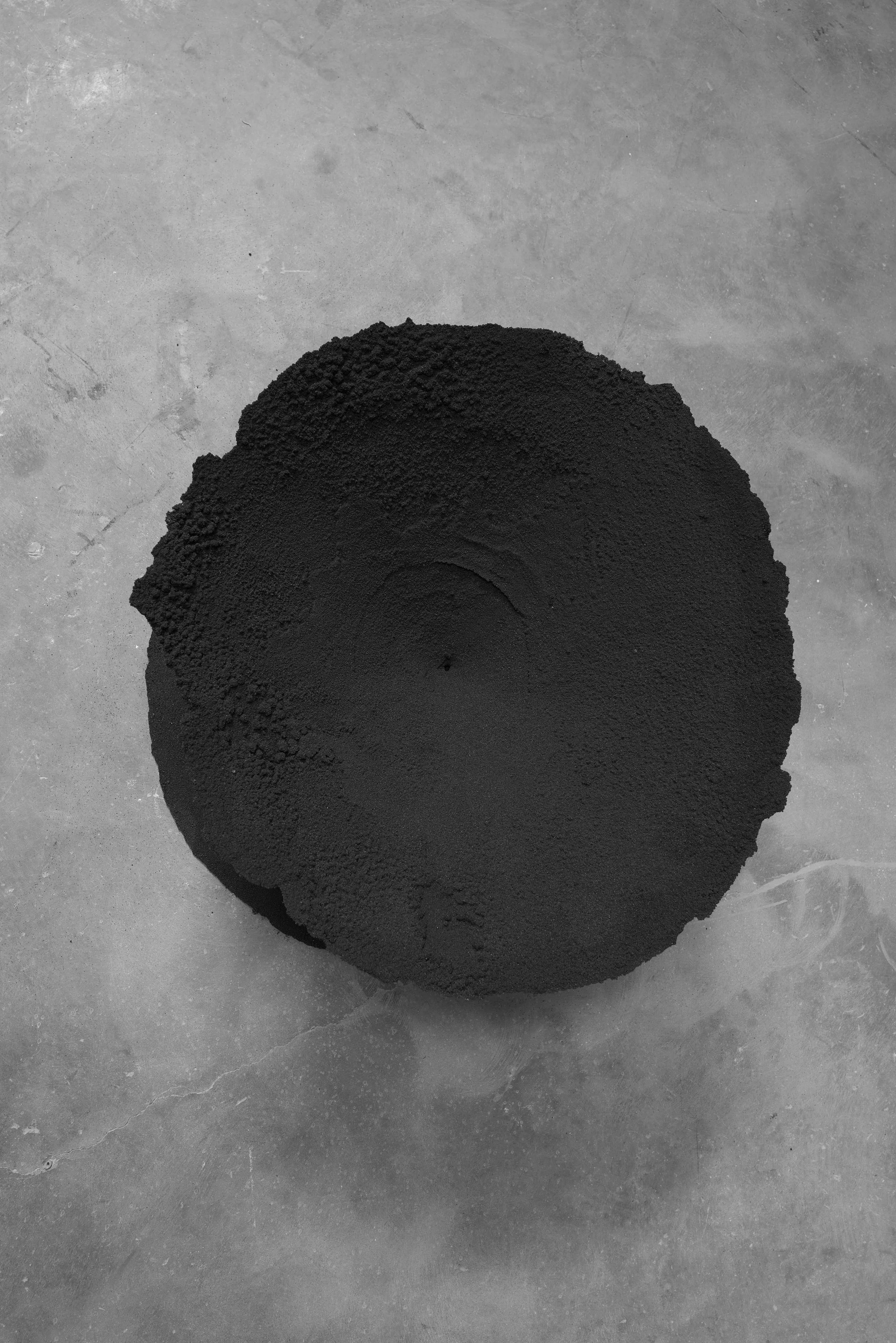
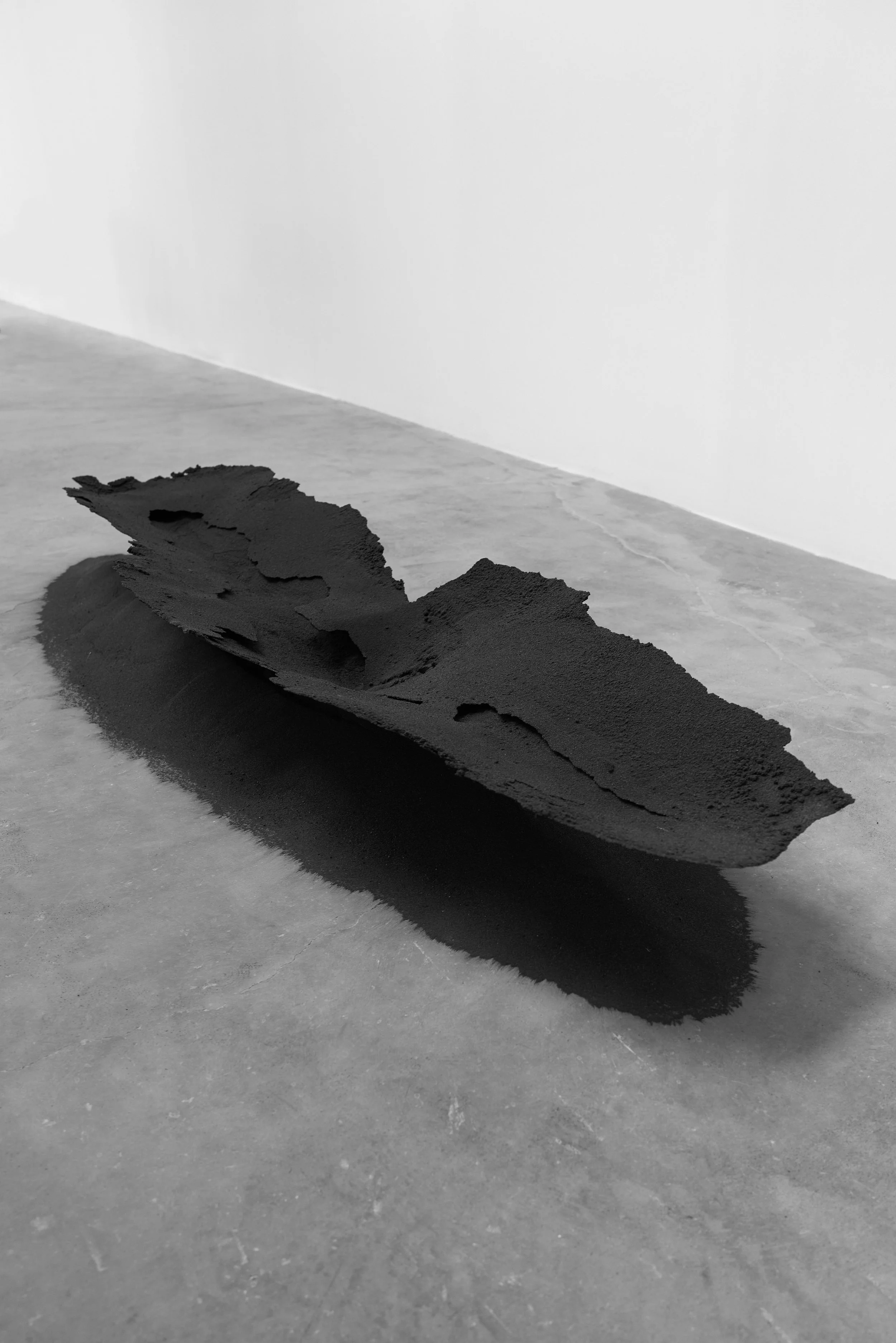
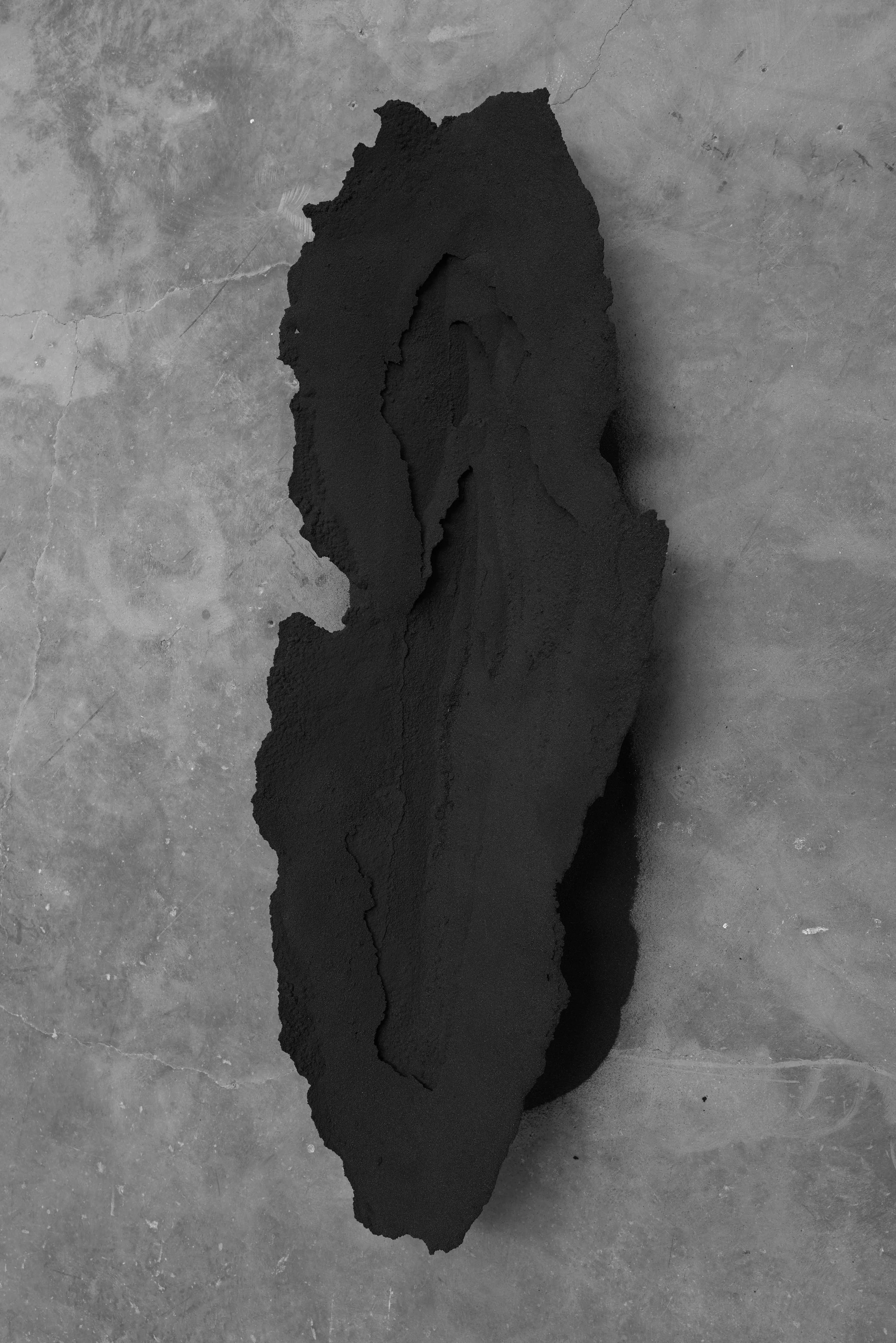
The motif of Al-Khidr, the Verdant One, offers a path for contemplating renewal — the greening of what appears inert. Known across global traditions, this figure moves in the lineage of Osiris, Attis, and Enkidu, archetypes of death and resurrection. Yet here the figure, like nature, is neither dead nor reborn; the conditions for a formal return are not yet set. The earth itself becomes the latent figure, present and immortal, awaiting activation in From the Land.
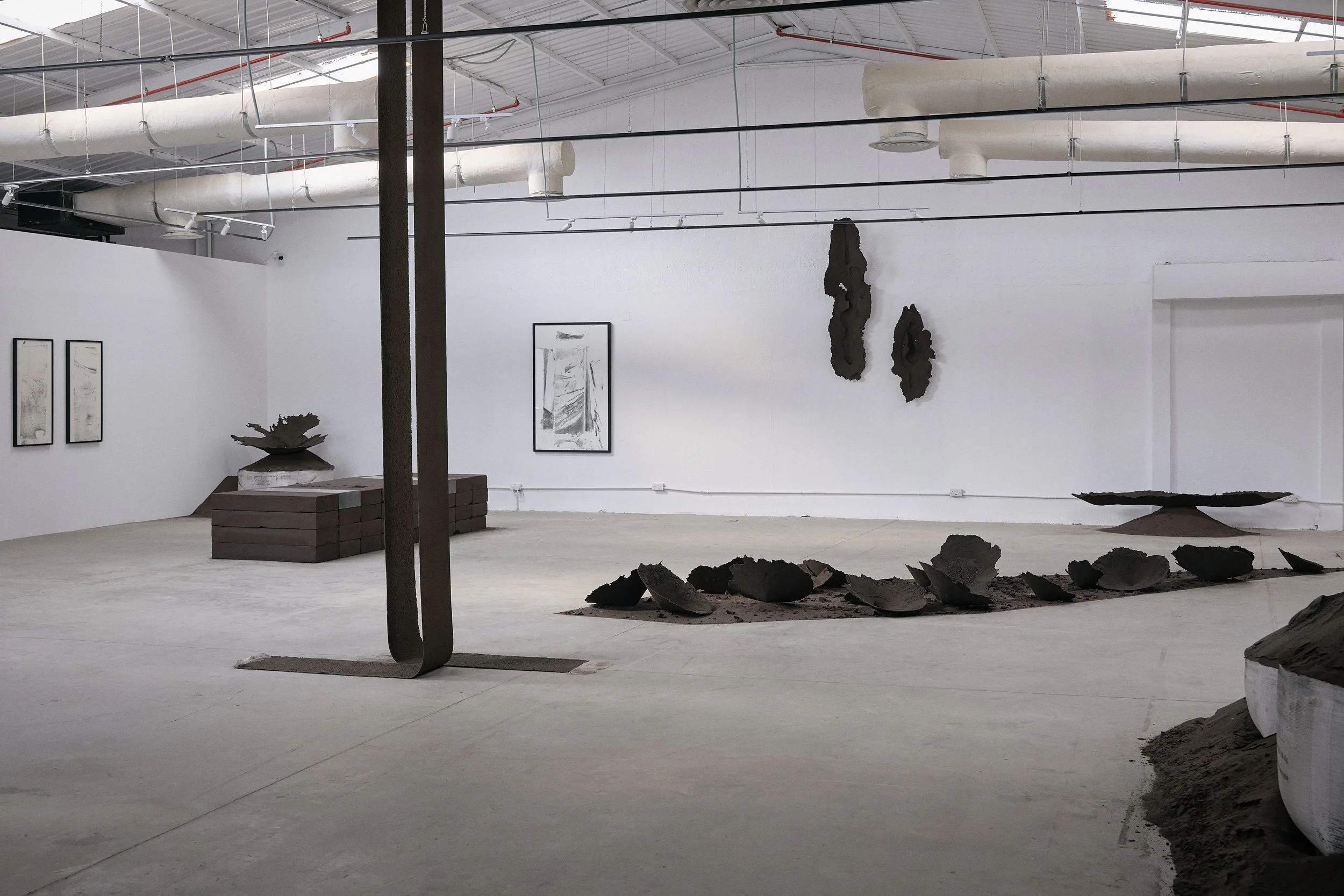
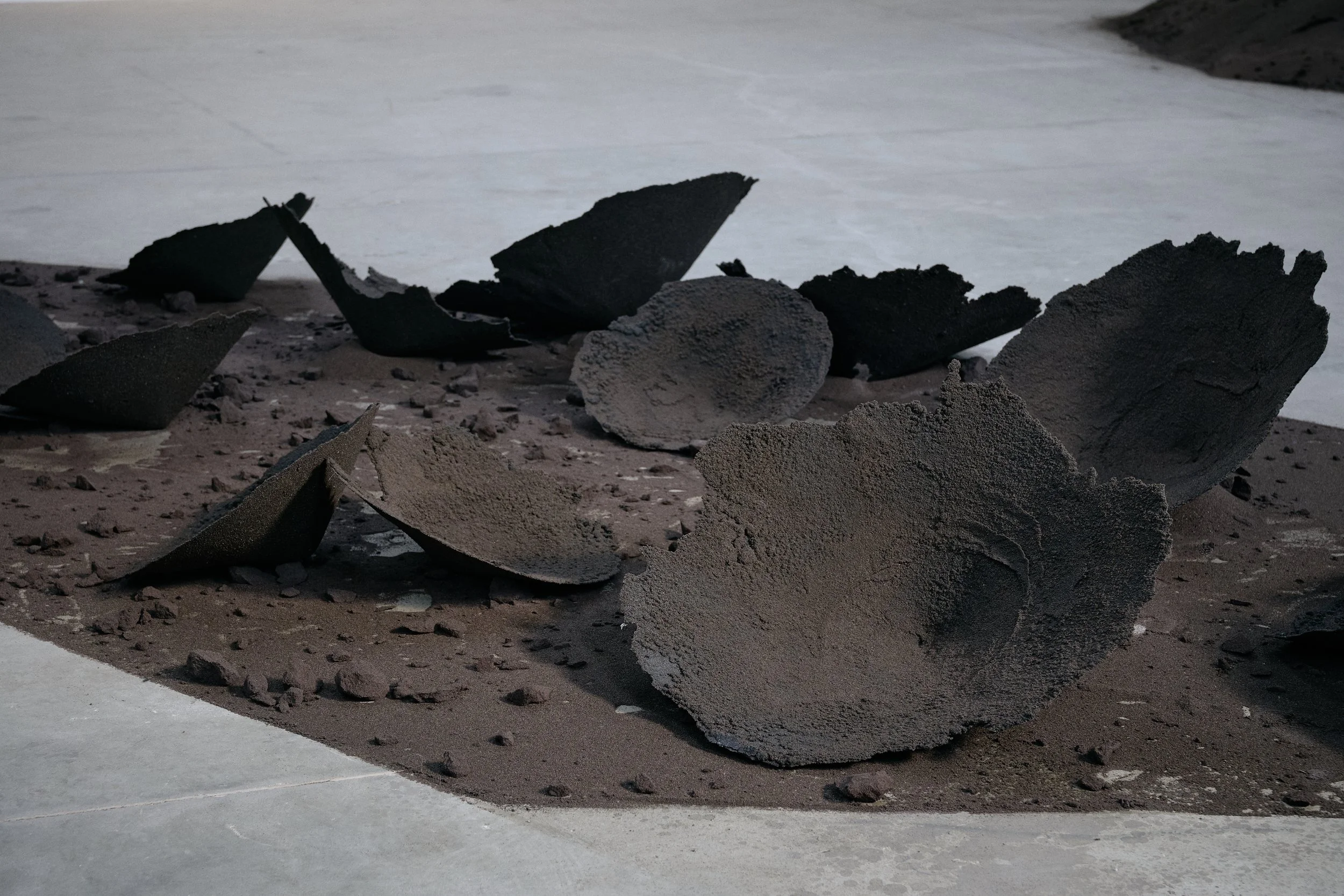
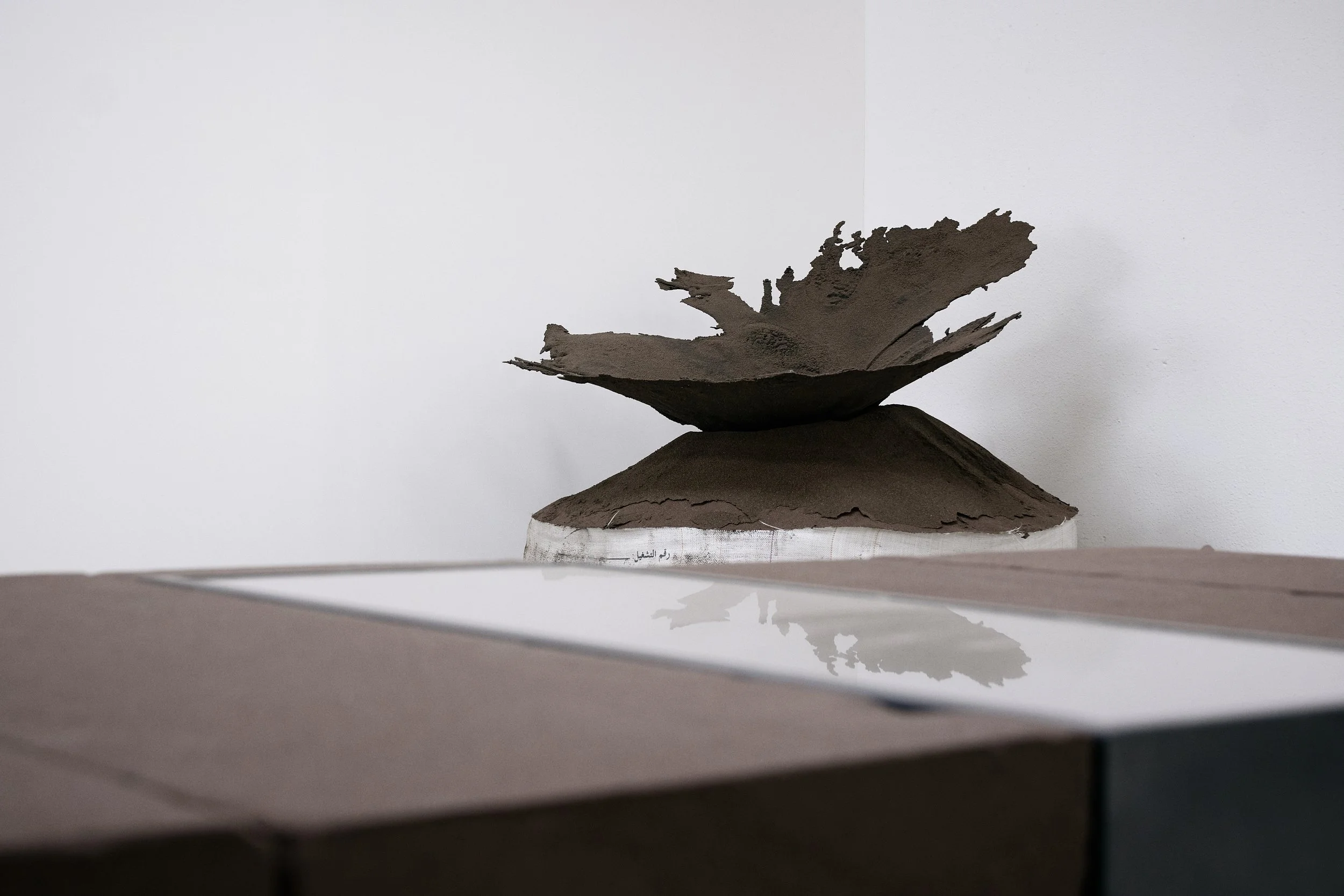
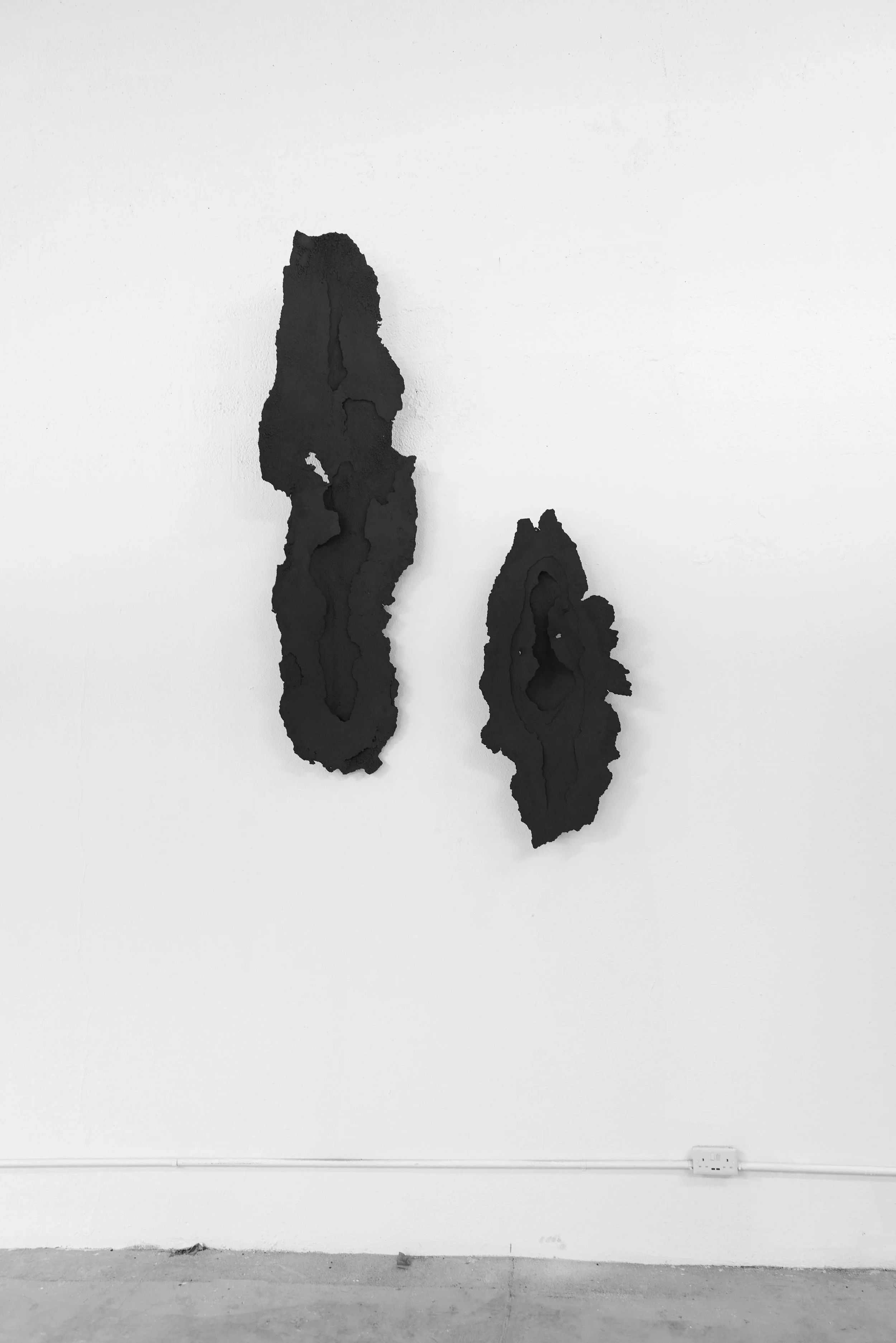
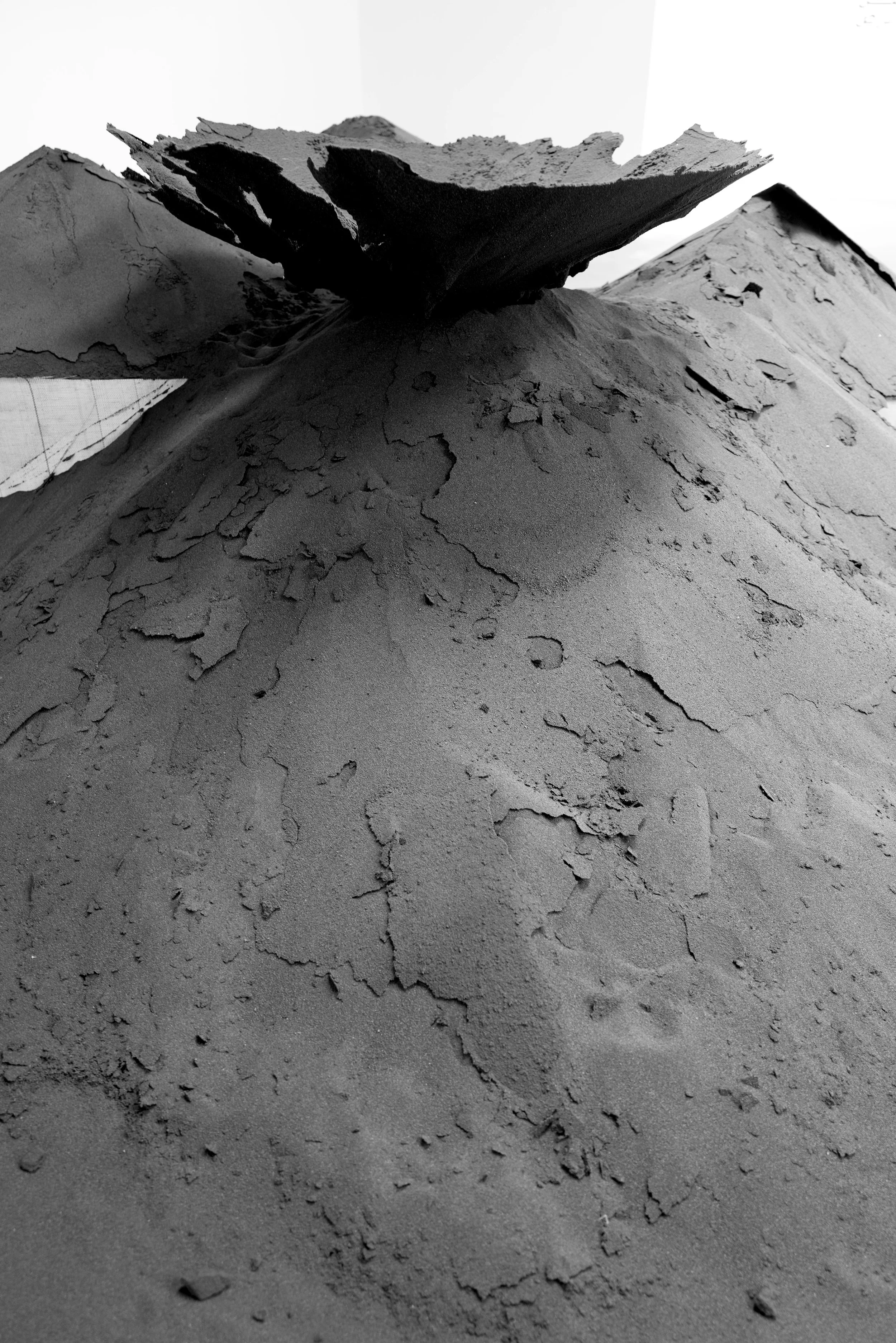
Form begins with a break. The block is fractured, its rigid authority undone, and the grain — released from the architecture of the mono-narrative — is buried in itself, laid to rest in its own potential. The material returns to ground: burial mounds are layered and relayered, multiplying into an ambiguous terrain between wasteland and agricultural landscape. The earth is tended, irrigated not with water but with a natural binder — an irregular rhythm of spraying that binds and releases at once.
When the layers harden, thin skins are peeled from the surface. The land gives up brittle forms that have been grown, weathered, and lifted — exhumed: forms birthed by burial.
The process turns the ground into author. Irrigation becomes rebinding; rebinding becomes harvest. The earth is harvested for shape and exhumed as nature's own crop — a harvest of form as bountiful as grains of sand, an infinite field of readings. Each piece is a remnant of a landscape that relentlessly rewrites itself.
Alien yet grounded, these objects arrive with the authority of something returned. They feel excavated and sprouted at once, suspended between scar and healing, soil and sky, form and its undoing.
-
![]()
From the Land (side view)
Series of sculptures. Reclaimed sand, gum Arabic, resin. Variable dimensions.
-
![]()
From the Land (top view)
Series of sculptures. Reclaimed sand, gum Arabic, resin. Variable dimensions.
-
![]()
From the Land
Reclaimed sand, gum Arabic, resin. Variable dimensions.
-
![]()
From the Land
Reclaimed sand, gum Arabic, resin. Variable dimensions.
-
![]()
From the Land
Reclaimed sand, gum Arabic, resin. Variable dimensions.
-
![]()
-
![]()
-
![]()
-
![]()
-
![]()


What Remains
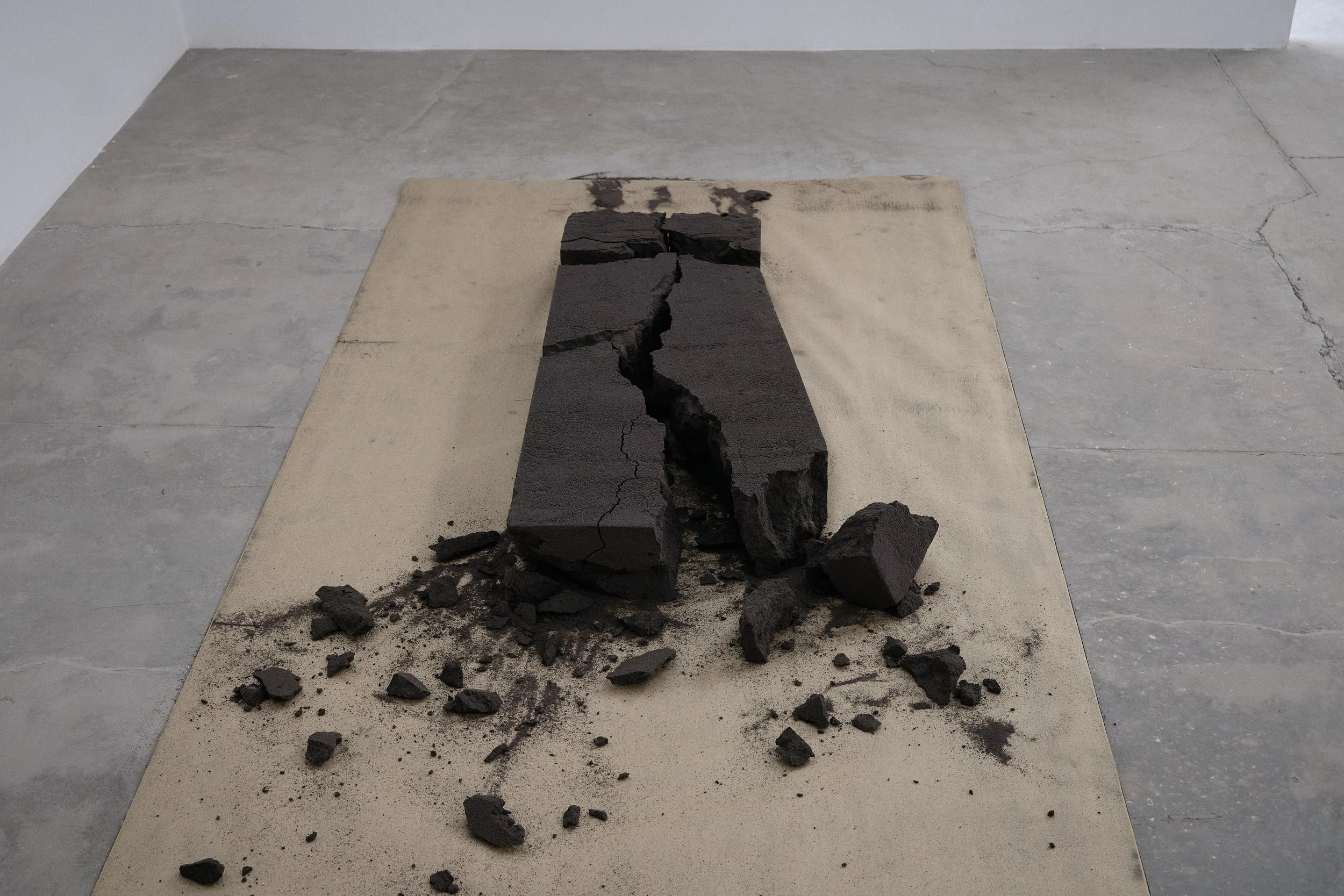
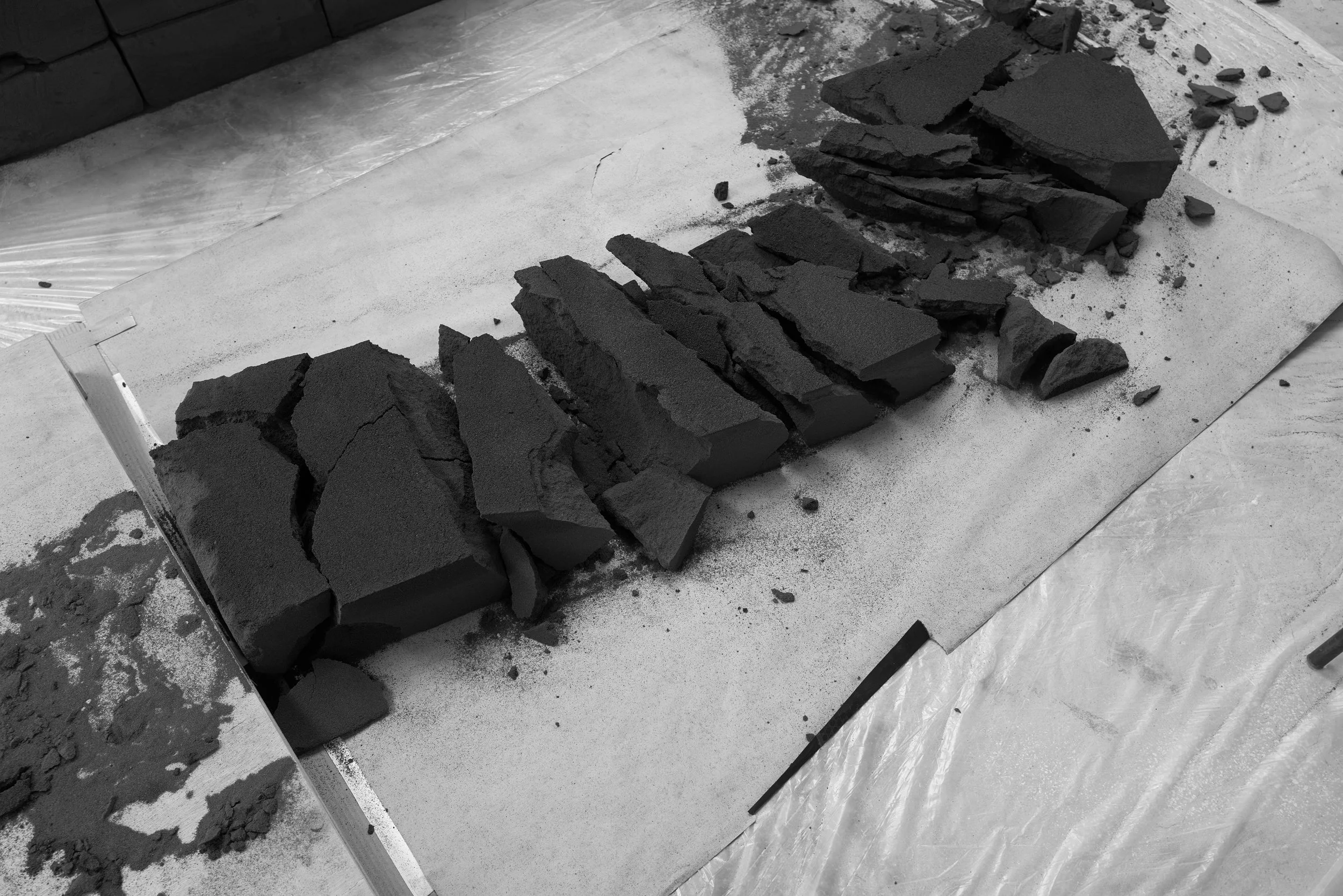
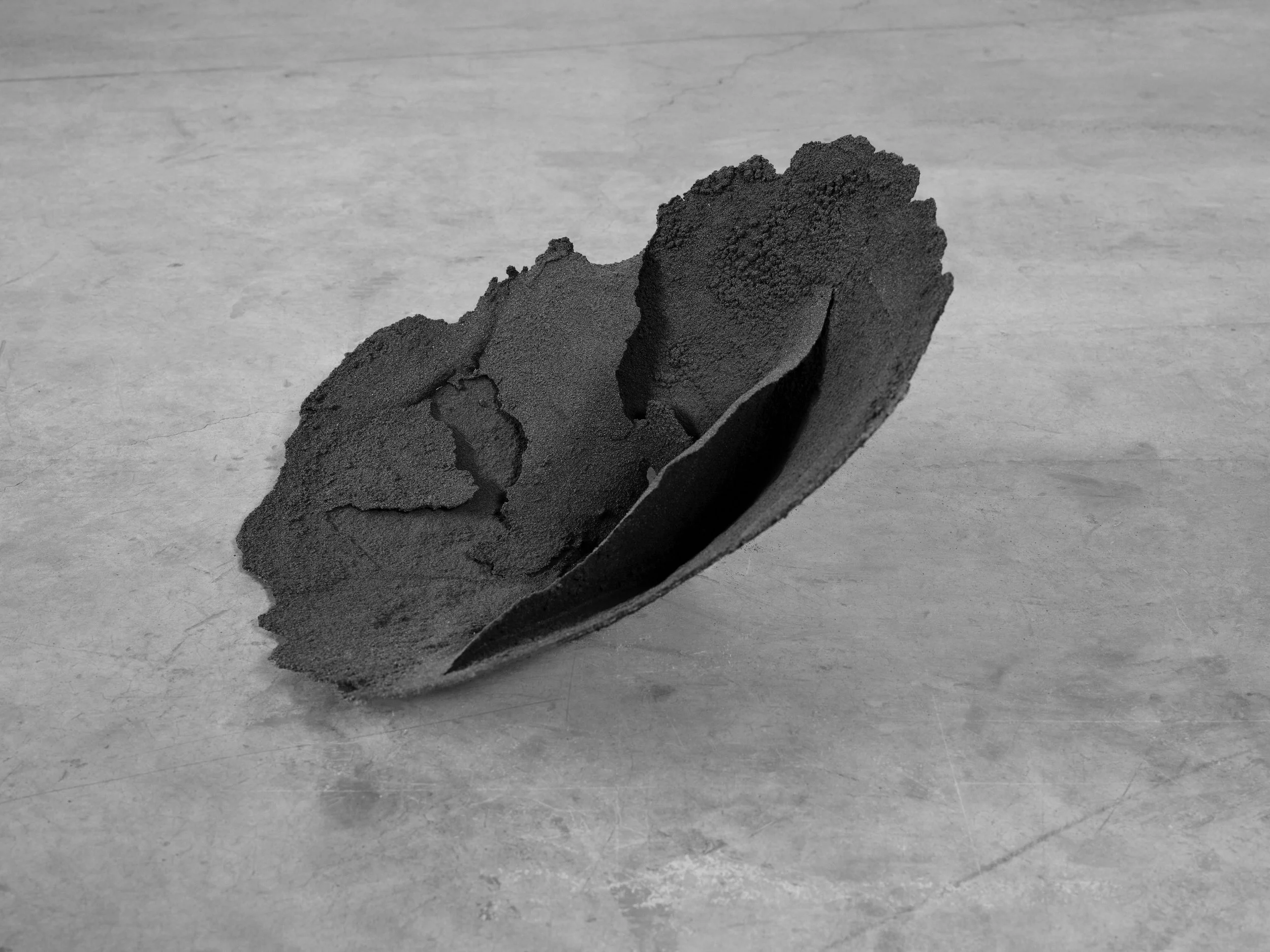
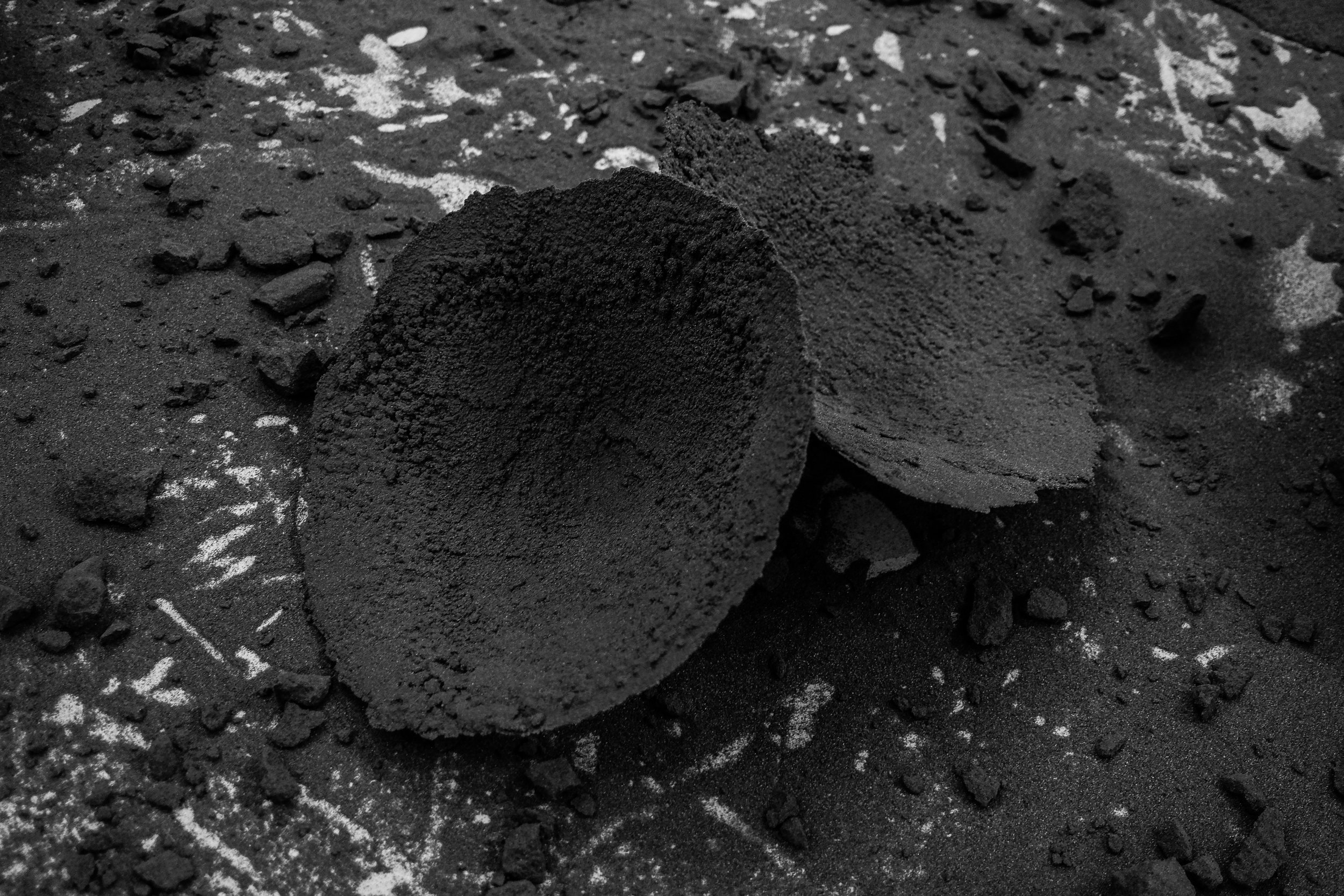
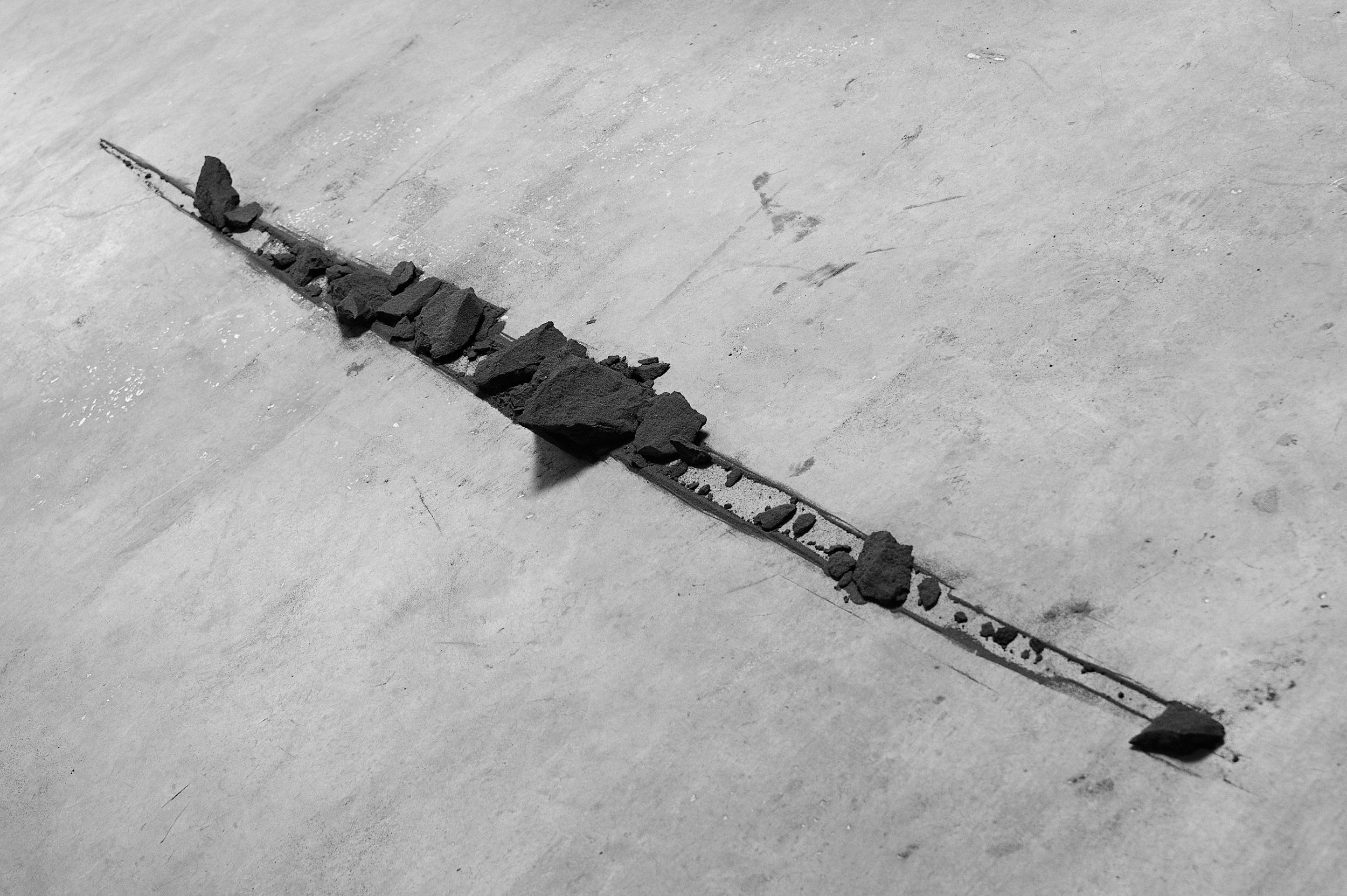
Renewal lies at the heart of this exhibition — a new day breaking ground — but it is not without violence and loss. That loss is never absolute; through the rubble, something generative emerges. If From the Land offers healing, What Remainsis the wound. Here is the cut, the rupture: the moment everything changes. Blocks of sand have been broken against the floor or against the brown side of carbon paper, a colour reminiscent of desert sand, the pieces gathered towards the point of impact. Material is smashed to bits on a hard surface, yet matter still retains the memory of its former whole. It remains unclear whether the grains want to dissolve further or return to formation.
Folding Grounds
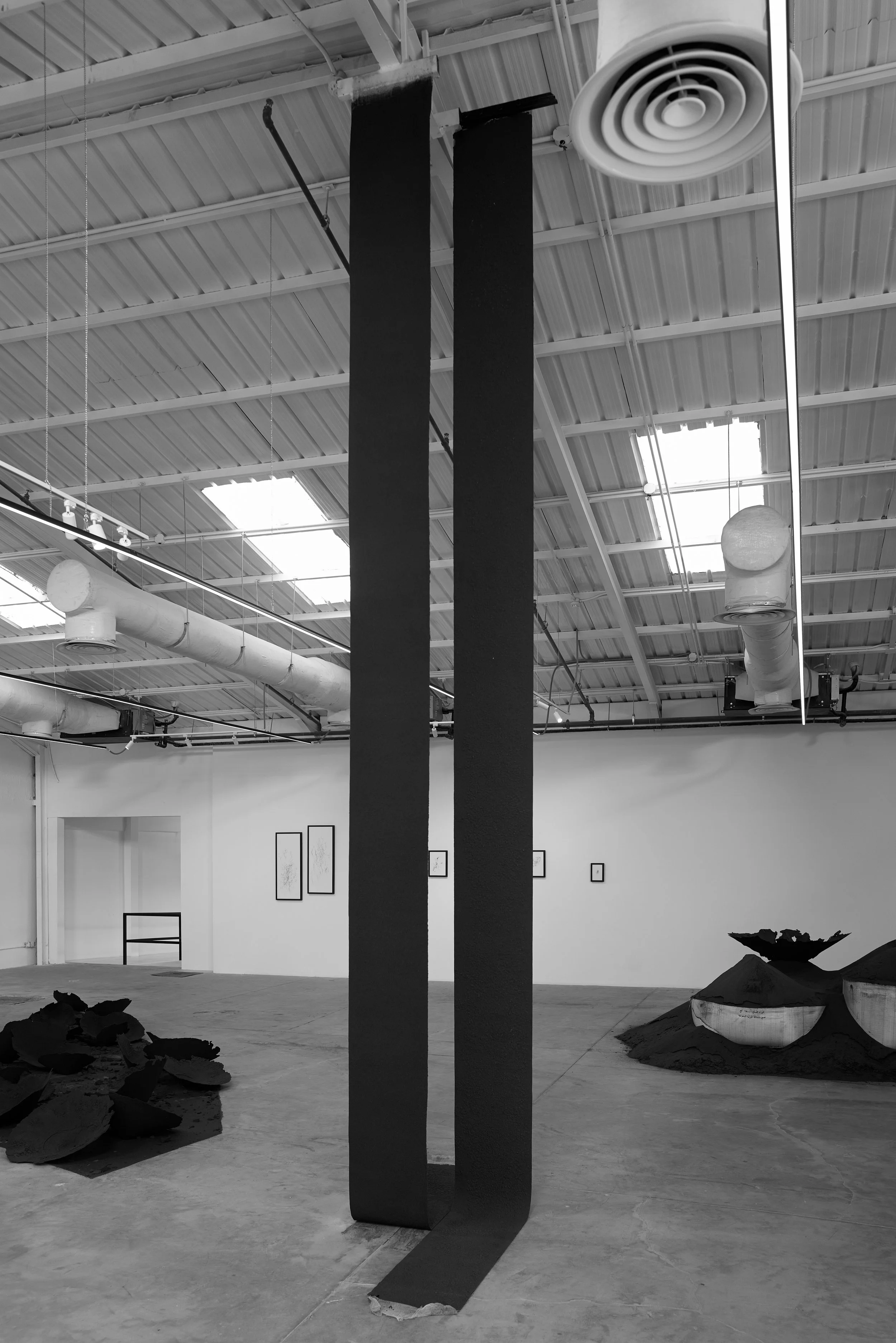
In Folding Grounds, the material's mutability comes to the fore. Large strips of coagulated sand are suspended from the ceiling or draped into form, drawing the eye vertically and recalling sand's structural role in construction. But here pliability is key — these formations have a textile softness. Whether shroud, garment, or carpet, the sand offers comfort and shelter, inspiring aspiration rather than veneration.
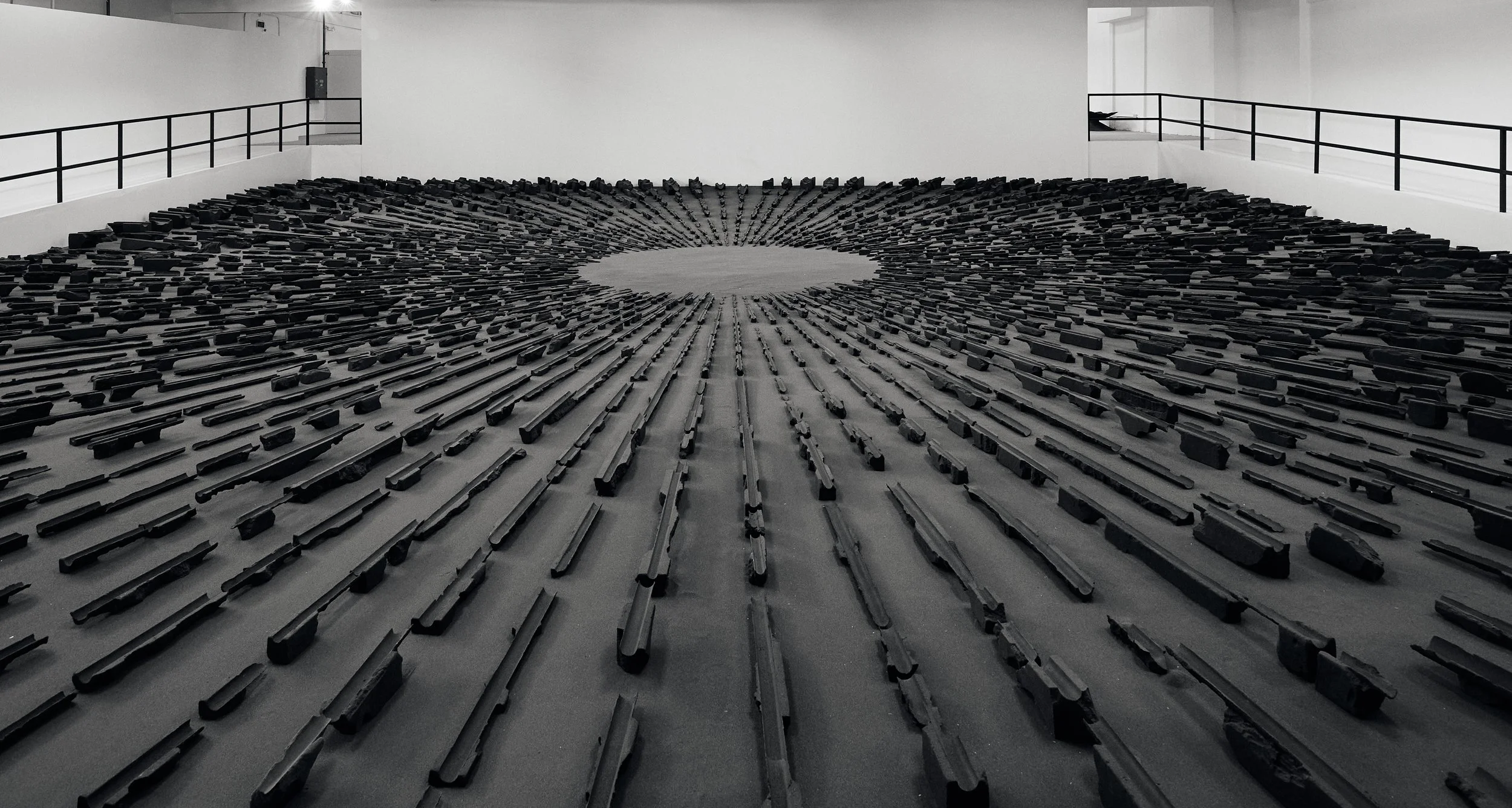
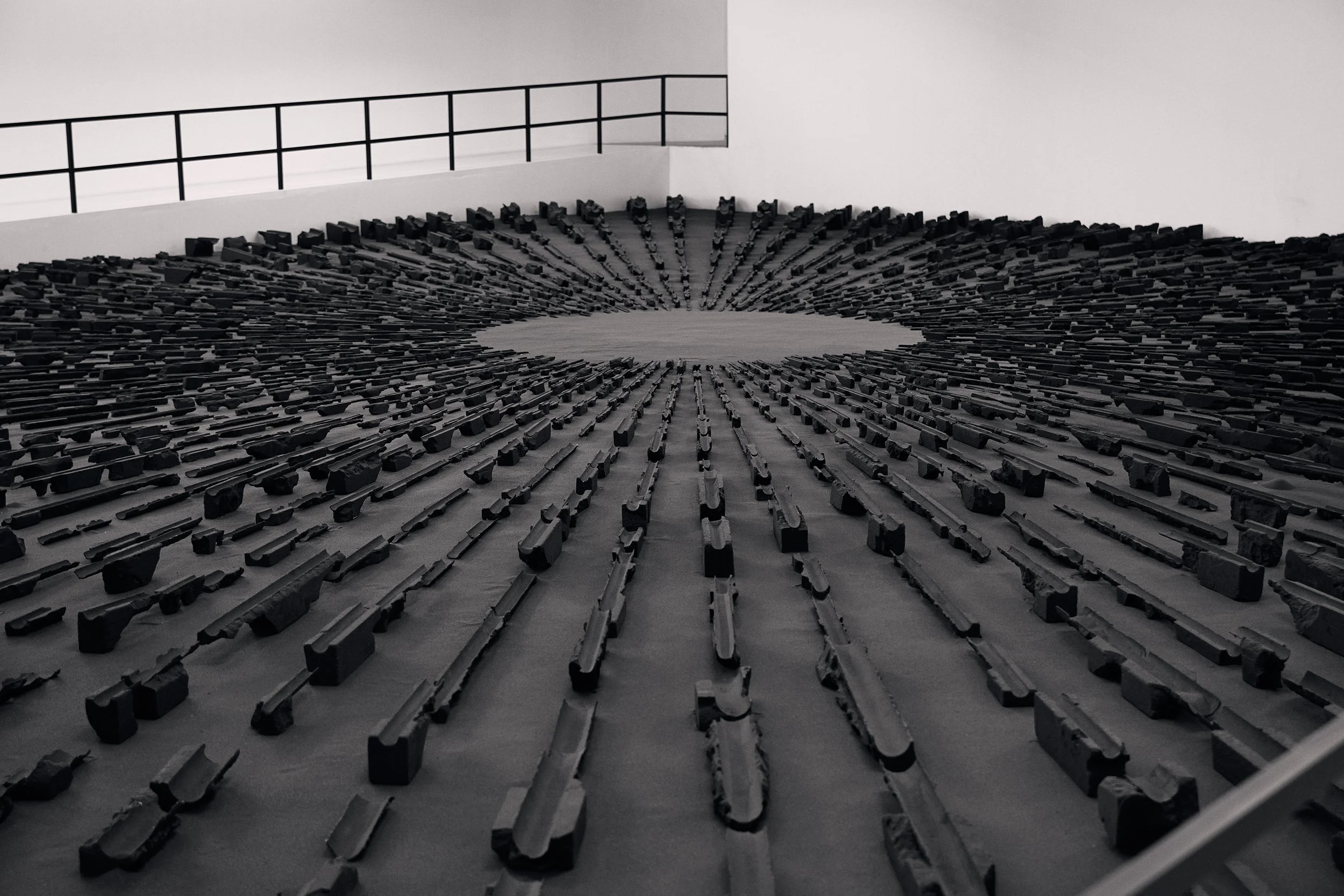
The Ground Day Breaks
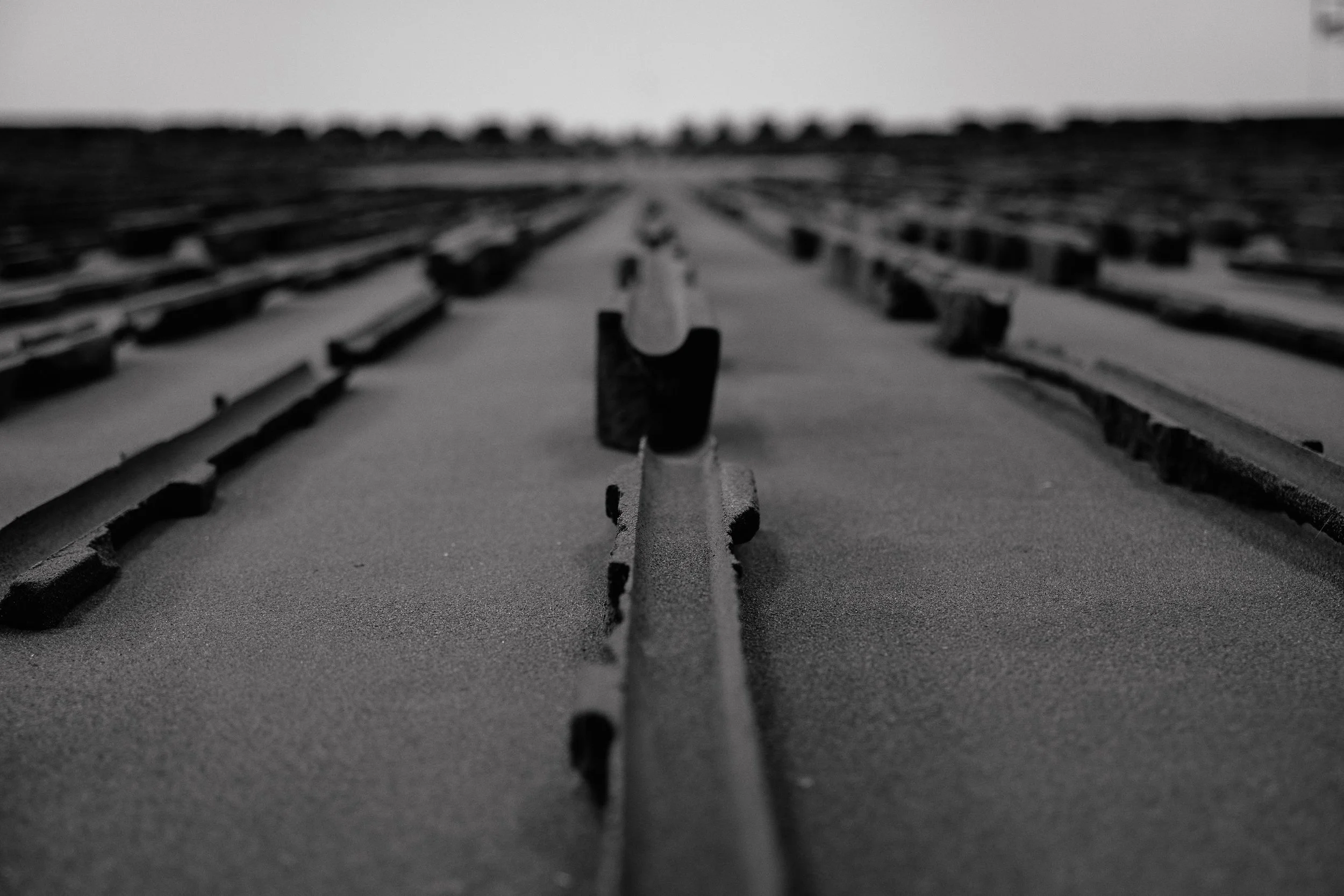
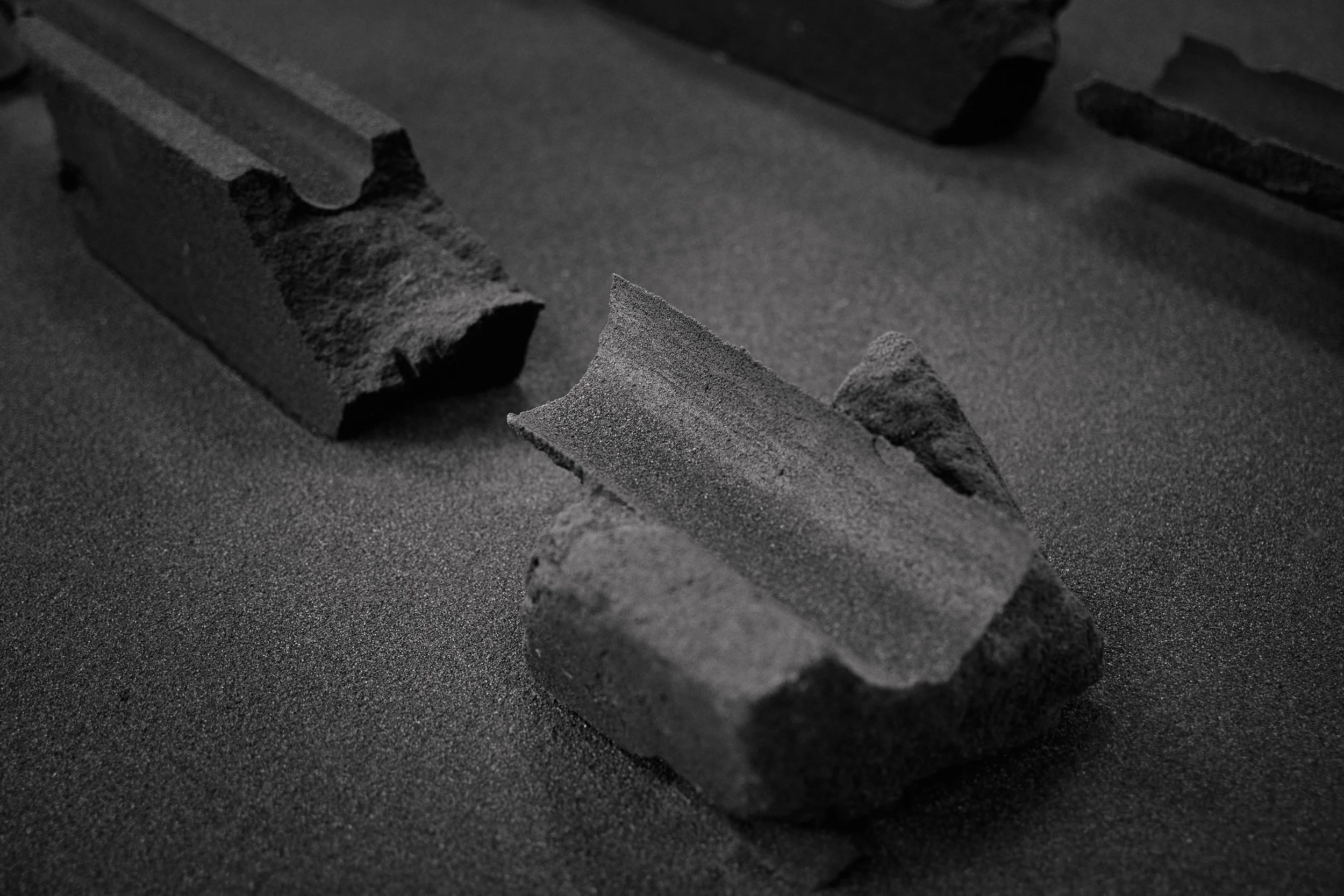
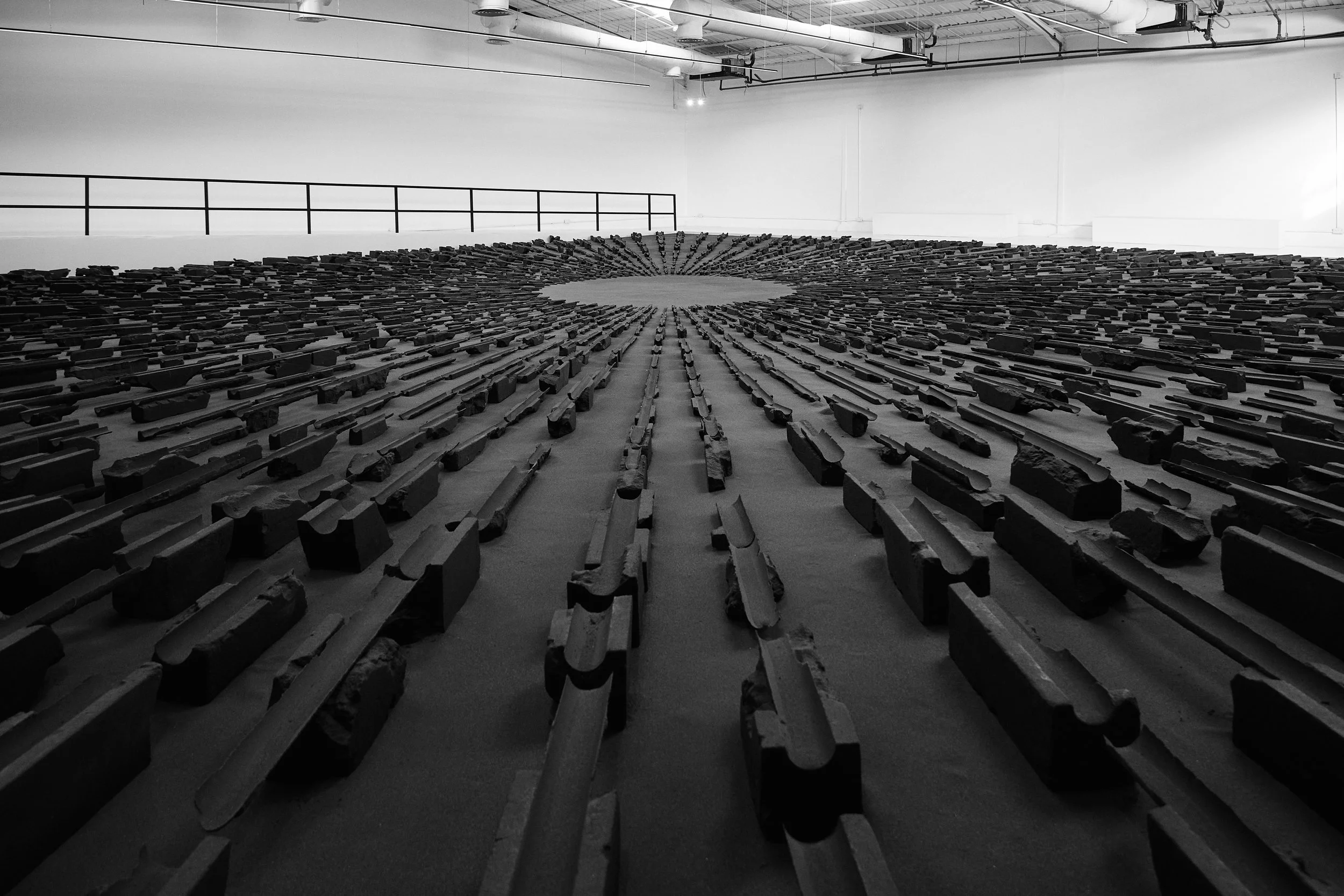
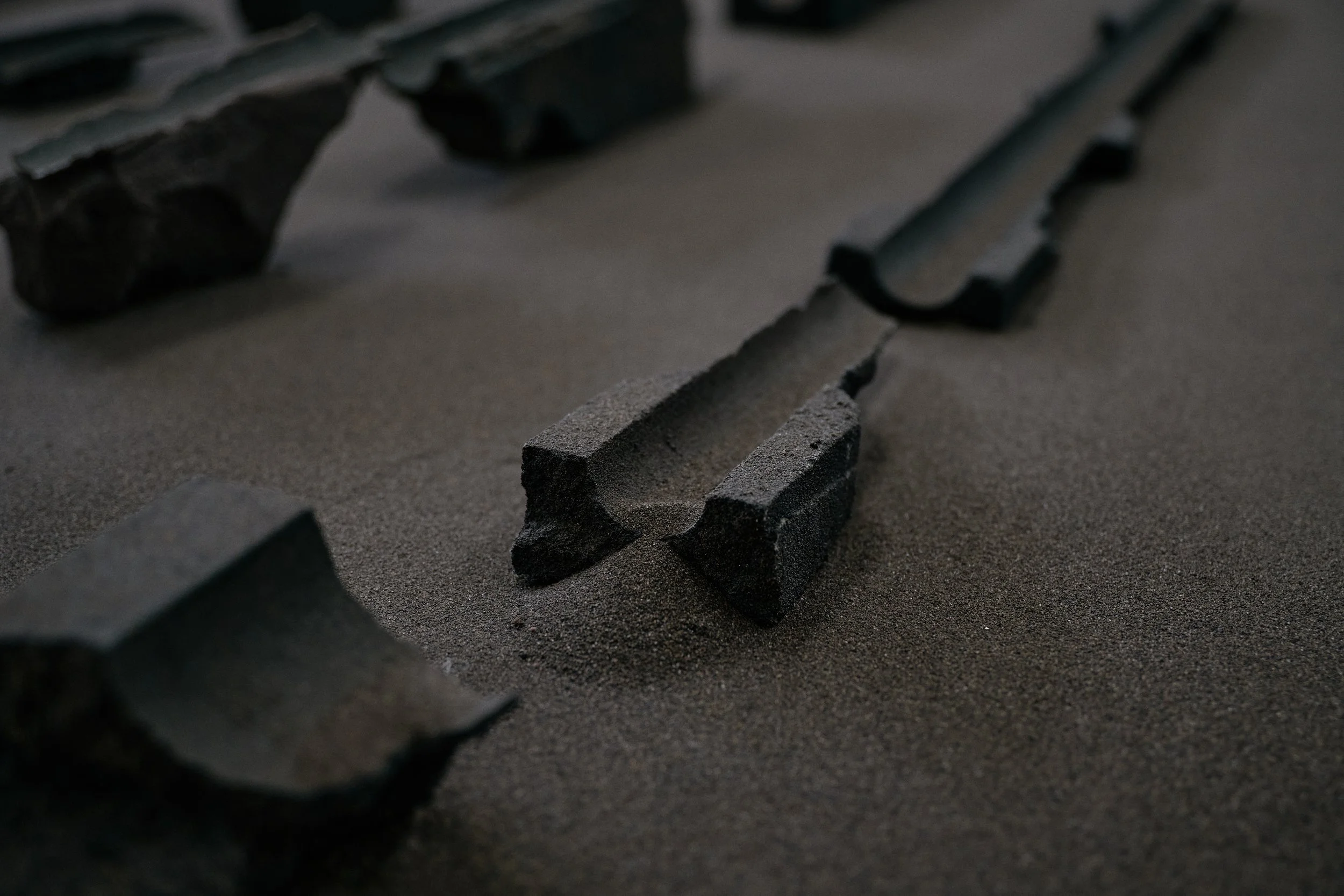
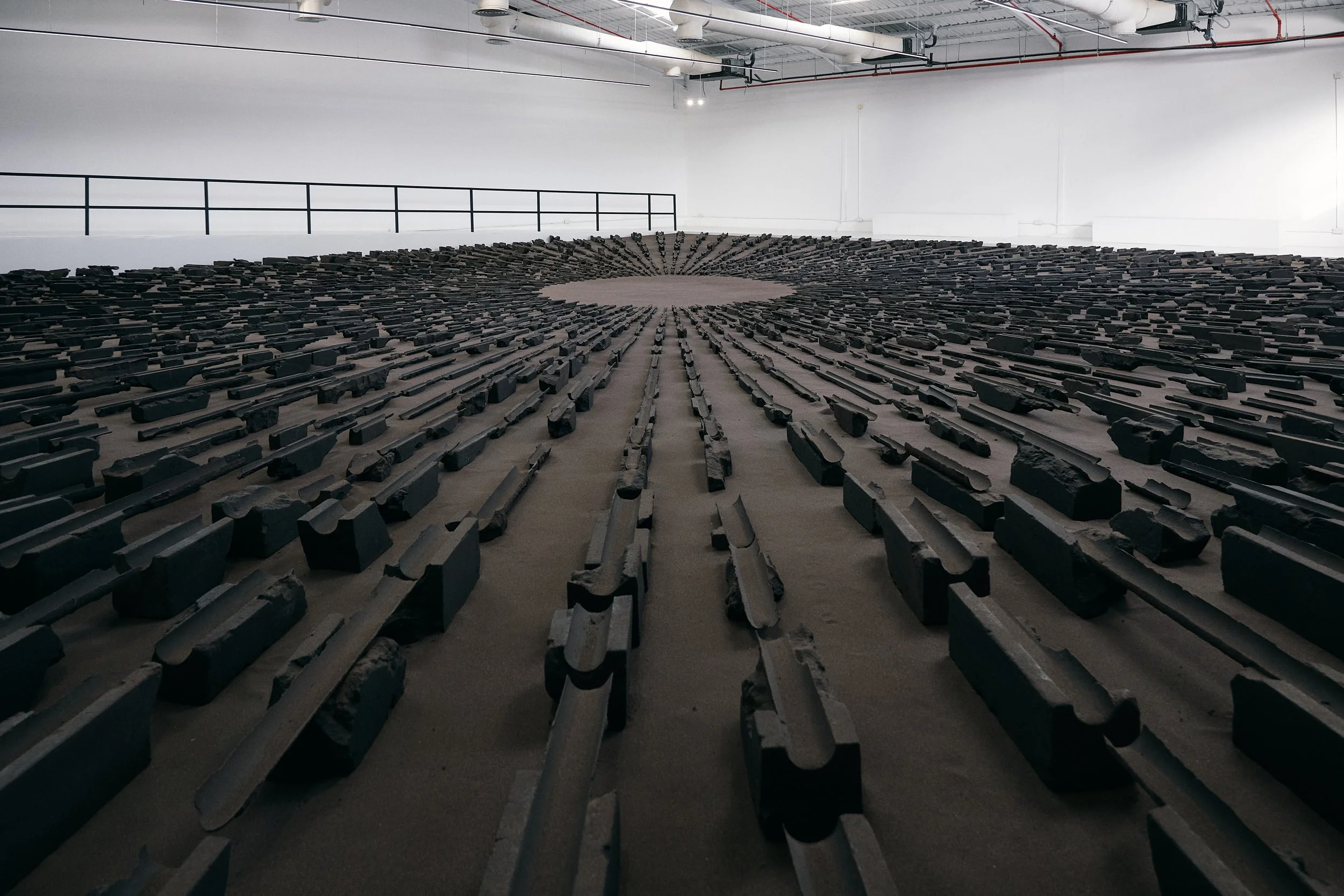
Throughout the exhibition, reclaimed sand acts as a granular agent of change — most palpably in the titular piece, a large-scale, site-specific installation of approximately 2,000 handcrafted sculptures arranged in a radial pattern. Few artists marry monumentality with tenderness and poetic sophistication; Shono does. Scale immerses rather than produces spectacle. Ruin voices possibility, not only disaster. The viscera of the work lie bare yet enthral rather than overwhelm. In this parched garden with its skeletal irrigation ducts exposed, everything falls apart and comes together. It swirls around an empty centre — a void from which everything radiates outwards and, conversely, is drawn back in. This two-way vortex should be impossible, but in Shono's world it is not. Subtle and defiant at once, The Ground Day Breaks offers a broken horizon — but a horizon, nonetheless. The work resonates with Brahim El Guabli's reading of the desert as both necropolis and life source, "terrifying and edifying; dangerous and peaceful." Shono gathers all these contradictions and shows how they are enveloped in a single grain of sand.